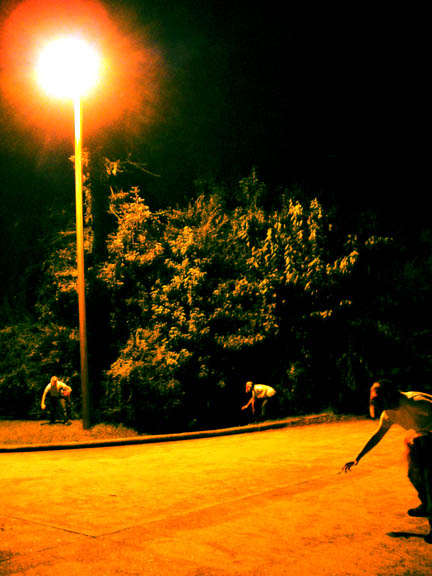
Cropped Will Cardini artwork

January 24, 2012

Matter by Iain M. Banks – Advanced Aliens in Westeros

This past Sunday I finished Matter by Iain M. Banks. It’s the third sf novel by Banks that I’ve read, and each one is a hefty meal of highly visual action on an enormous scale. They are both alternatingly grotesque and funny – I’ve been keeping my wife up half of the night with my guffaws. Imagine my surpise, then, when I read reviews on the Internet and discover that the ones I’ve read (the aforementioned Matter, The Algebraist, and Consider Phlebas) are considered (the first two more so than the tragic Consider Phlebas) to be some of Iain M Banks’ lesser sf works. Considering how they compare to most fsf, I’m eager to read what fans consider his better ones. I wasn’t entirely satisfied with Matter but it was thought provoking.

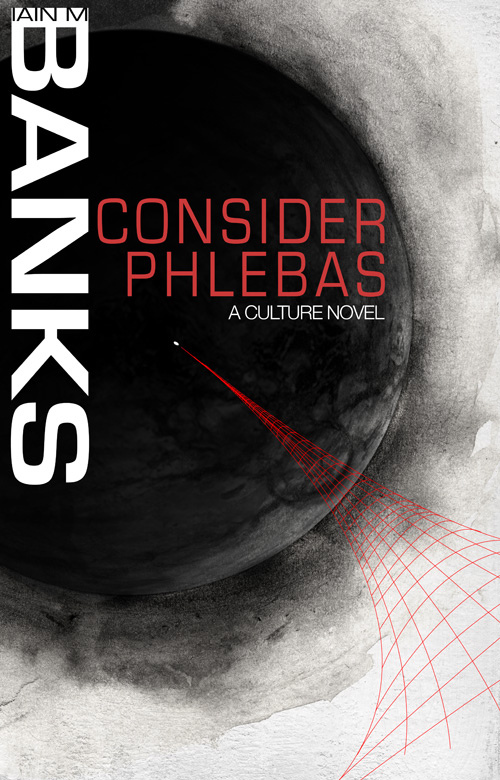
Consider Phlebas speculative cover by Luke John Frost
I’m not a huge fan of the current covers of Banks’ books and it was hard to find good images of the Salwowski covers, so I was delighted to find these speculative covers that Luke John Frost made for a school project.
In Matter, I thoroughly enjoyed the philosophical detours, witty dialogue, grand vistas, and the concept of a fantasy faux-European setting nested within a space opera galaxy. Any sf cosmos that includes level upon level of more powerful beings is going to get me. That idea is at the heart of the Hyperverse, after all. Although the climax came and went rather abruptly, I liked how Banks subverted my expectations for how the story was going to end up by destroying two thirds of the knot of plotlines with one bold slice. But I also stumbled on some of the book’s flaws. Although the nerd in me reveled in the pages-long aside that described all of the depths and adjectives of the shellworld Sursamen, the early, heavy chunk of exposition dropped me out of the flow. I think that the information could be more smoothly integrated in the narrative. Similarly, a lot of the plot of the book involves the main characters being pulled from place to place by forces beyond their control. Maybe I’ve read one too many long quests in a fantasy novel, but I got tired of that quickly. However, I simultaneously appreciated how the character’s inability to control their fates related to the larger theme of the insignificance of the individual.

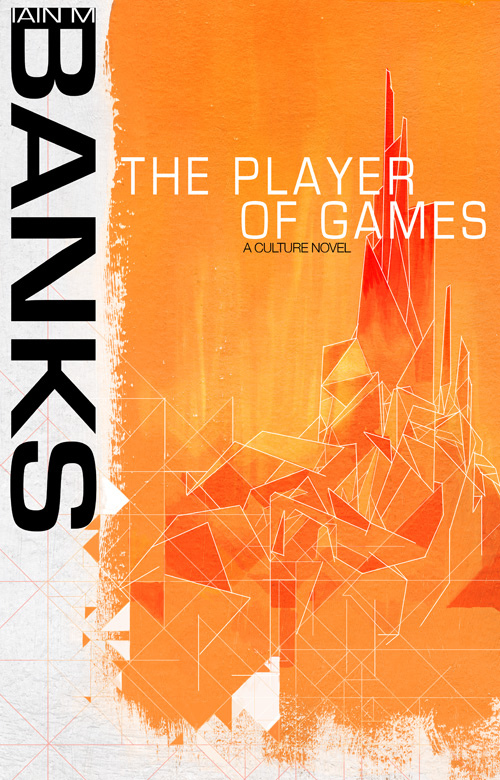
Player of Games speculative cover by Luke John Frost
Another speculative cover by Luke John Frost.
What struck me the most was how the themes and plot structure of Matter reminded me of A Song of Ice and Fire by George R. R. Martin. I’ve been thinking a lot lately about the ultimate meaning behind the violence, oppression, and hopelessness that Martin portrays because of Sean T. Collins’ excellent (and rife with spoilers) tumblr All Leather must be Boiled. In multiple posts, Collins analyzes how Martin uses war, realpolitik, and fanatic warriors to condemn the havoc and tragedy that these forces bring to civilization. Replace magic with incredibly high technology (which, as Wizard Clarke has told us, are indistinguishable) and Banks does the same, with both Consider Phlebas and Matter. Things get even more interesting when you add the moral dimension of the Culture to the mix, who try to assist civilizations in developing past systemic violence and oppression, but do so by sometimes fostering those same tragedies. Basically, you could read Matter as the answer to the hypothetical question, “What if super advanced aliens intervened in the conflicts in Westeros and Essos?”

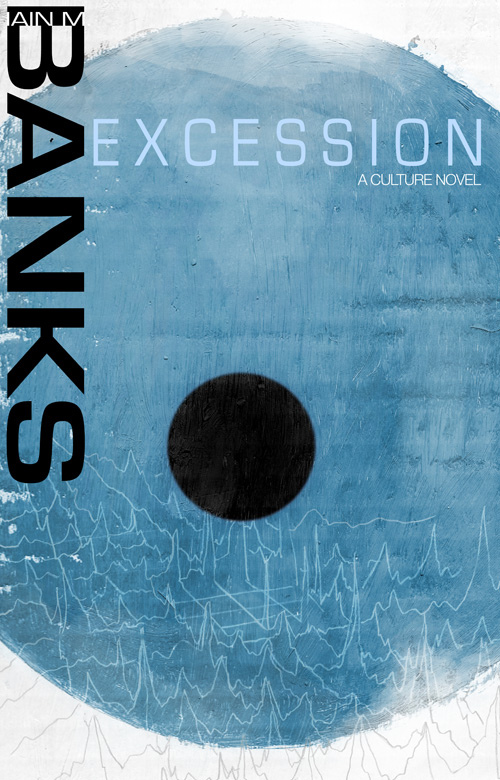
Excession speculative cover by Luke John Frost
A third speculative cover by Luke John Frost.
I wanted to read Excession next, which sounds like the best, but all they had at my local used book shop was The Player of Games and Use of Weapons so I’ll tackle those. I don’t think I’ll read all of Banks’ sf novels in one go though – I like the idea that there are superb sf novels still out there for me that I know I’ll enjoy. If I have any more thoughts worth sharing, I’ll be sure to post them here. If this post has made you curious about Banks, you should read this article by Annalee Newitz on io9 that summarizes Banks’ most popular creation, the Culture, a utopian vision of what our future could be, and has summarizes of the various books. It’s what got me to check him out originally.
January 17, 2012

Is Melancholia Possible? An Alternate Ending

I saw Lars von Trier’s movie Melancholia this past weekend. It’s beautiful, epic, and tragic. To sum it up, sublime, in the Romantic sense of the word. It’s like a big dumb object science fiction book but with a much greater focus on human emotion than those kinds of novels typically have.

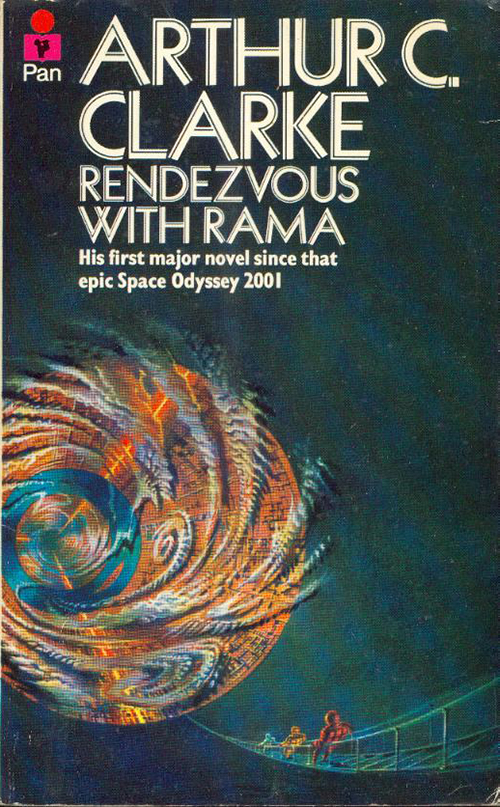
Rendezvous with Rama by Arthur C Clarke, cover artist not credited
Rendezvous with Rama by Arthur C Clarke, one of the most well-known big dumb object sf books. Cover artist not credited. Via the Internet Speculative Fiction Database.

Whether it’s Melancholia, Rama, the Stone, or Jupiter, we keenly feel the insignificance of our place in the cosmos when we contemplate enormous and mysterious objects of great power.

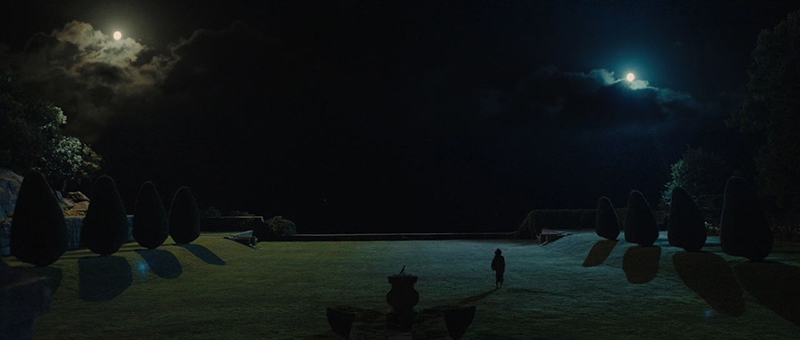
Melancholia still
A still from Melancholia, via a review on The Wolfman Cometh blog. The reflected light from the Moon and Melancholia casts two shadows.

But after watching Melancholia, my mind is full of more than sublimity and sorrow – I’m also left wondering, “Is that even possible?” Melancholia appears to be a rogue planet, a planet that has been ejected by its original solar system and doomed to wander the galaxy, its path subject to the gravity wells of any random mass it encounters. When a paper was published this past May that calculated that there may be more rogue planets lost in the Milky Way than stars in the sky, rational skeptic Phil Plait posted about the likelihood of one hitting Earth on the Bad Astronomy blog. His conclusion was that, while there’s a chance that a a rogue planet could pass closer to our solar system than the nearest star, it’s extremely unlikely that one would hit Earth. This makes intuitive sense to me – our planet is a tiny blue dot in the cold, black vastness of space.

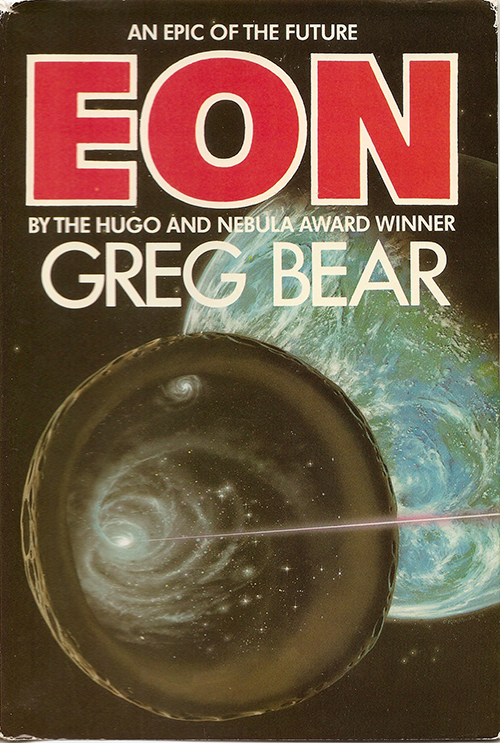
Eon by Greg Bear, cover by Ron Miller
Eon by Greg Bear, my favorite big dumb object sf book. Cover by Ron Miller. I scanned this from my personal library. Some of the imagery in this book actually inspired parts of my comic VORTEX.

But let’s say a rogue planet did come barreling through our solar system. Even then, the scenario wouldn’t necessarily play out the same as it does in the movie. According to a thread on the Stack Exchange forum for “active researchers, academics and students of physics”, what results from the interaction of three different masses in three different positions traveling at three different speeds (in this case, Melancholia, the Earth, and the Moon, eliding the also relevant influence of the Sun and other planets) is a notoriously troublesome outcome to calculate (it’s called the three-body problem), so who’s the say what exactly would happen if Melancholia passed by the Earth.


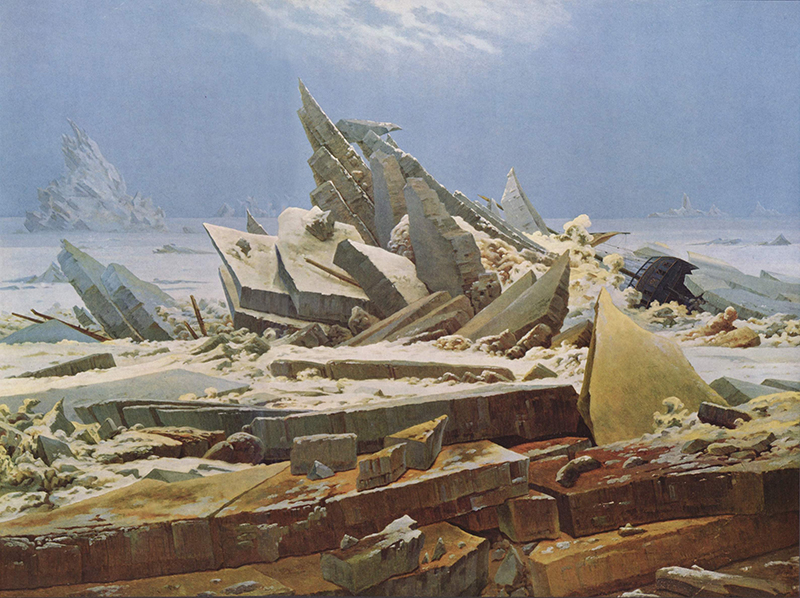
Das Eismeer / Die verunglückte Nordpolexpedition, Die verunglückte Hoffnung (1823-1824) by Caspar David Friedrich, a Romantic painter of the sublime. Via Sights Within.

One possibility, more likely than destruction, is that the gravitation influence of another, much larger planet would fling Earth out of the solar system. Rather than a fiery cataclysm, it would be a slow decline. The Sun would grow more distant each day. Global cooling would replace global warming. The oceans would slumber under a thick crust of ice. Carbon dioxide would fall from the sky like snow. Once the atmosphere froze to the surface, the stars would harden to unblinking knives of light. The remaining energy of the earth’s molten core would feed small pockets of microbial life in a subsurface ocean but it would be a lonely, cold existence soaring through the eternal night.

November 30, 2011

Belated Thanksgiving Post: An Appreciation of Anne McCaffrey

Filed under: SF Reviews — Tags: , — Will Cardini @ 12:56 am

I know this is the week after Thanksgiving, and thanks are traditionally spoken beforehand, but I’d like to offer some gratitude to the recently departed Anne McCaffrey: Thank you for giving me an escape from the bullying and loneliness of my chubby nerd middle school life.

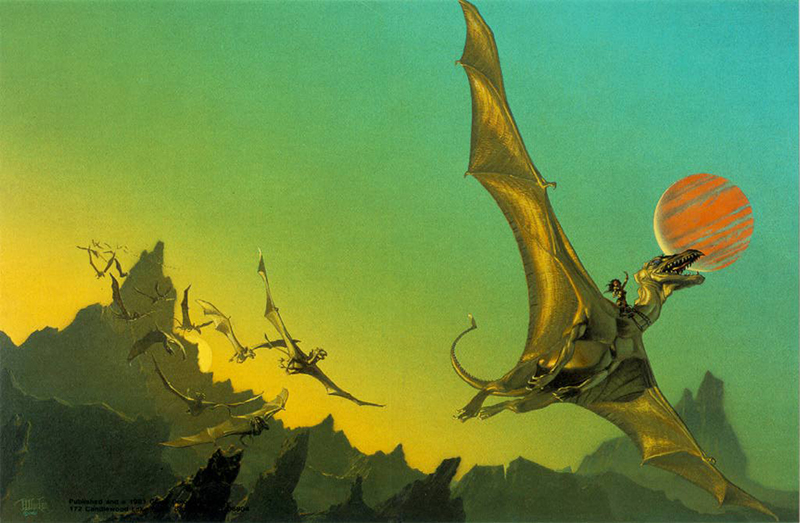
Dragonflight cover by Michael Whelan
The cover for the first book in the original Dragonriders of Pern trilogy, Dragonflight, artwork by Michael Whelan.

I still distinctly remember the day I first encountered a book by Anne McCaffrey. I was in middle school. I’d read The Hobbit and The Lord of the Rings but not much else science fiction or fantasy. I was a total dinosaur nerd. I was complaining to my Dad about not having a good book to read, and he said, “I think I can help you.” We went to my brother’s room, and my Dad pulled down several cardboard boxes from the closet full of his old science fiction and fantasy paperbacks from the 60s and 70s. There were books by Isaac Asimov, Cordwainer Smith, Philip K Dick, Clark Ashton Smith, Arthur C Clarke, Algis Budrys, Larry Niven, Stanislaw Lem, many others (these boxes of books supplied me with reading material until I moved out of my parents’ house), and Anne McCaffrey. My Dad dug through the boxes, flipping through each book and discarding them until he uncovered Dragonflight and Dragonsdawn. He said, “You like dinosaurs, read these. They’re about dragons.” I was hooked. I stayed up all night reading them.

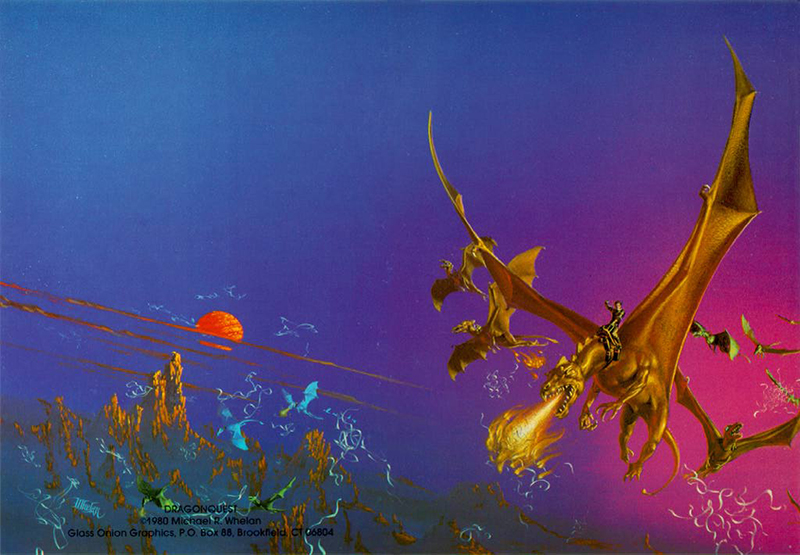
Dragonquest cover by Michael Whelan
The cover for the second book in the original Dragonriders of Pern trilogy, Dragonquest, artwork by Michael Whelan.

I read about Pern and other Anne McCaffrey universes for years. I bought every new Pern book when it came out. I got teary eyed when major characters died. But my favorite Pern book, by far, was The White Dragon.

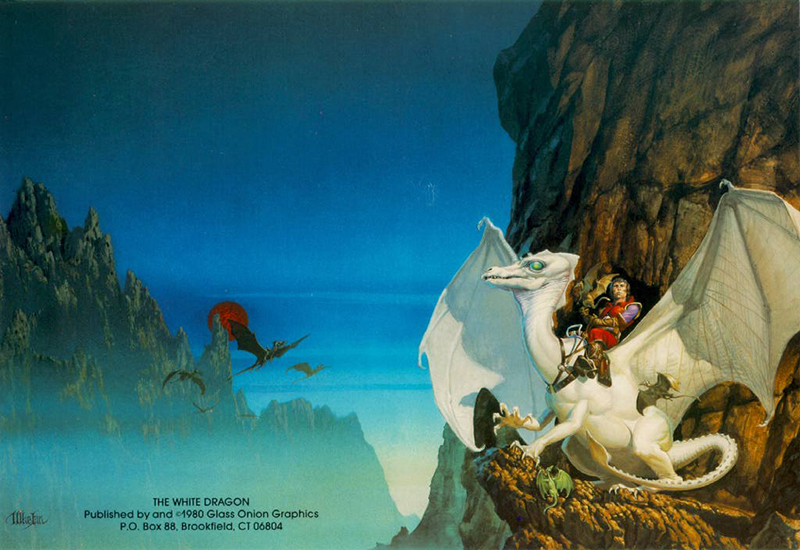
The White Dragon cover by Michael Whelan
The cover for the third book in the original Dragonriders of Pern trilogy, The White Dragon, artwork by Michael Whelan. My favorite.

I read The White Dragon over and over again until it fell apart. I got a white sweater with the cover art. I felt like I was the main character, Jaxom, riding the titular white dragon. I was a chubby nerd – I definitely would’ve gotten the runt dragon (if I got one at all). But like Jaxom and his dragon, I had a secret power – the fantastic worlds that I would imagine, bolstered by Anne McCaffrey’s books, gave me some respite from teasing and alienation and let me experience the soaring flight of a good read. Thank you Anne McCaffrey. I think it’s time I got another copy of The White Dragon to reread.

March 29, 2011

Review: Hyperion and The Fall of Hyperion by Dan Simmons

Filed under: SF Reviews — Tags: , , — Will Cardini @ 7:10 am

Hyperion and The Fall of Hyperion, by Dan Simmons, are one strange, fascinating story in two volumes. I hope that Jo Walton decides to re-read it when she comes to it in her Revisiting the Hugo Awards Nominees blog series on the Tor website (Hyperion won a Hugo and The Fall of Hyperion was nominated).

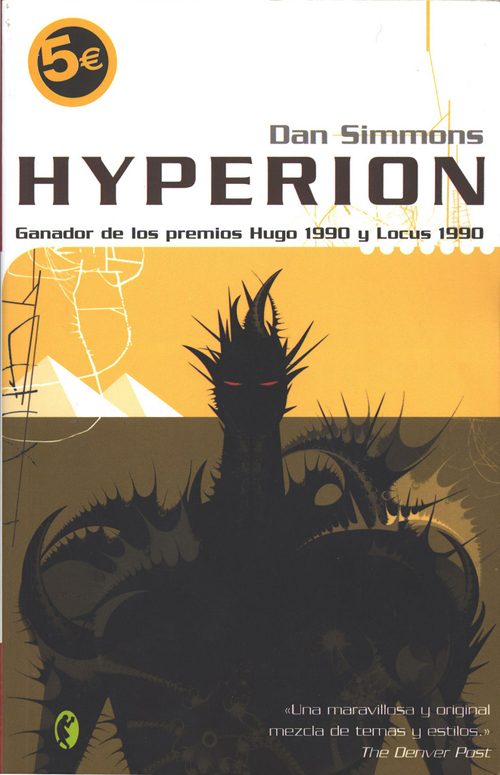
Spanish cover of Hyperion by Dan Simmons
Spanish cover of Hyperion by Dan Simmons, via Virao del Casco’s flickr.

Click here for my review.

February 8, 2011

Dungeon Crawl Stone Soup + Fort Thunder = Procedurally Generated Comics

It’s less than two weeks before my wedding, so of course I’ve become addicted to an ever-changing fantasy action RPG with a massive online community. I’m not talking about World of Warcraft – I’m talking about the free, cross-platform, and open-source roguelike Dungeon Crawl Stone Soup.

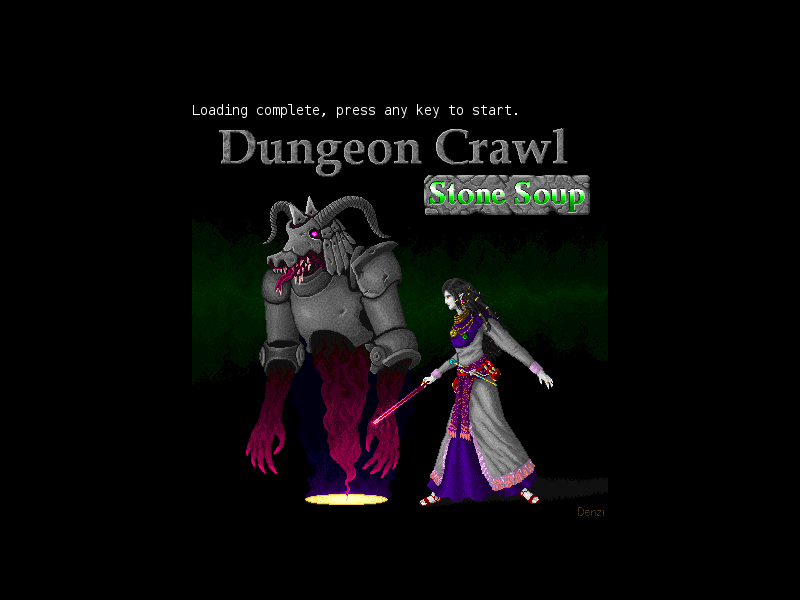
Dungeon Crawl Stone Soup Title Screen
Dungeon Crawl Stone Soup title screen

Click through to read more about roguelikes and how playing them is like reading a Fort Thunder comic

February 1, 2011

Can We Think Inhuman Thoughts?

In the past two months I finished Tad WilliamsShadowmarch epic fantasy tetralogy and then burned through his other, earlier epic fantasy tetralogy, Memory, Sorrow, and Thorn for the third or fourth time.

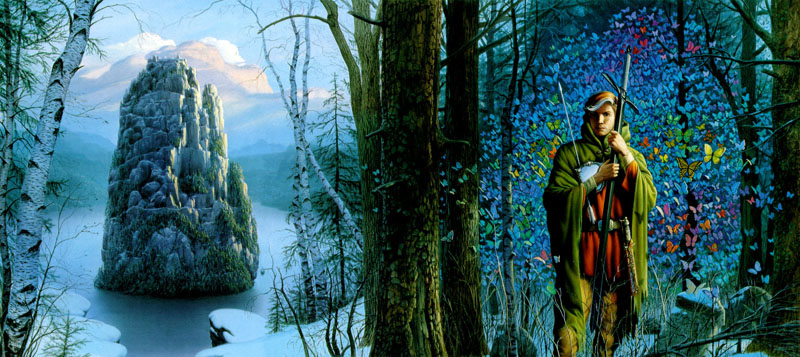
Michael Whelan's cover for Stone of Farewell, book two of Tad Williams' Memory, Sorrow, and Thorn fantasy series
Michael Whelan’s cover for Stone of Farewell, book two of Tad Williams’ Memory, Sorrow, and Thorn fantasy series

What I dig about Williams, besides his excellent (albiet sometimes slow-paced) prose and efforts to re-upholster standard fantasy tropes, is his attempts to depict truly inhuman beings and cultures in his stories. Science fiction and fantasy authors have always grappled with these kinds of depictions. Some question if it’s even possible for us human beings, with our mental biases, to truly imagine the thoughts and cultures of some other type of intelligence. In this blog post, I’m going to discuss several attempts, how they succeed or fail, and how this relates to my own artistic practice. Be warned, this essay is long.
Click here to read the rest

January 5, 2010

Ian Harker

Filed under: Comics Criticism — Tags: — Will Cardini @ 7:08 am

I hope that all of y’all had a happy new year! I’ll have a 2009 recap/2010 resolution post up soon….

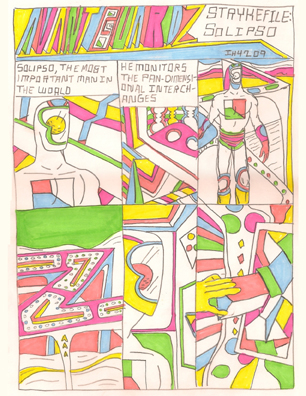
Last week, I traded minis with Ian Harker and got my two comics in the mail. They’re called The City and Avant Guardz Strykefile: Solipso.

I dug both minis, some good sci-fi imagery with a lot of strange abstraction. Here’s a shot from the second book, which also has awesome colors:

December 2, 2009

73# vv33>£4~>z

Sorry about the missed post on Friday, I was taking a little Thanksgiving blogcation.

My parents live in The Woodlands, a master-planned community 28 miles north of downtown Houston. Although the suburb was bought out by real estate developers in 1997, George Mitchell’s original vision for the community was focused on aesthetics. Relics of some of the original ideas can be seen. On Research Forest Drive, office buildings made entirely out of mirrored windows crouch among the pine trees and swampland. It’s as if Superstudio’s utopian Continuous Monument was begun in the Great Piney Woods of East Texas.

These buildings house genetics firms with nondescript names like GenSys, GenTech, and BioSynth. Inside these corporations, sinister DNA-bending scientists are working to create a new subspecies of humans who can thrive in the petrochemical smog that blankets Houston. One day, they will break free from the labs and take everything within 50 miles of the refineries in Pasadena away from their oxygen-breathing brethren.

September 1, 2009

Sci-Fi Sunday Part Two: District 9

Filed under: SF Reviews — Tags: , — Will Cardini @ 7:39 am

The Sunday before last (part two of our sci-fi Sunday – part one is here), Glade and I drove down to San Antonio and watched District 9 with my parents. It was really intense and riveting, although maybe unnecessarily gory. I’m going to discuss the plot, so if you haven’t seen it yet, you may want to pass on this post. I tried to avoid any foreknowledge of the plot of the movie going in, which definitely enhanced the experience for me. Ok, you’ve been warned, here goes:

I’m sure that many of you are already familiar with the premise, which is in the six-minute short Alive in Joburg also directed by Neill Blomkamp:

Unfortunately, this short showcases the main problem that I have with the movie: District 9 is a Halo movie set in Slumdog Millionaire. When Millionaire was up for many Academy Awards this past February, it was accused of fetishizing poverty, but District 9 takes it a step further – the physical setting of the slum called District 9 was a slum that was being evacuated while the movie was being filmed, according to this interview with director Neill Blomkamp on io9, which makes the movie mirror reality a little too closely for me to be entirely comfortable with it. Similarly, all of the quotes in the short from non-actor South Africans come from asking them about immigrants to Johannesburg from other parts of Africa, according to that same io9 interview.

As far as the Halo connection goes, all of those action sequences in the short look like Halo cut scenes to me. And then we get to District 9, and all of the action sequences (not to mention the weapons and the mech) look like they were lifted straight from the Halo movie that Peter Jackson and Blomkamp were gonna make until it got canned, and they decided to go with District 9! I enjoy good action sequences, but these had too much in common with first-person shooters and they made the movie seem unbalanced to me. I was hoping for more sci fi ideas and less guns.

It may seem that I disliked the movie, but I enjoyed it. It just didn’t live up to the hype for me, especially when it came out a few months after Moon, an intelligent, minimal sci-fi movie following the footsteps of 2001 and Tarkovsky’s Solaris. All that being said, there was one thing in the movie that really, really worked for me, and that was Wikus’ slow, horrific, and grotesque transformation in a prawn. No matter how unrealistic it may be scientifically (unless, of course, DNA has been seeded thruout the cosmos by benevolent urpeople), it really worked for me emotionally, and it’s the fulcrum around which all of the action and character development of the movie takes place. I’ve always been fascinated by the role that limnal beings play in narrative and myth, so it was excited to see a major movie take that up as its central theme. I also appreciated how important the Nigerian gangster’s belief in sympathetic magic (which can manifest as “If I eat you, I’ll gain your power”) was in the movie. So, despite District 9‘s shortcomings, I think it was one of the better sci-fi movies that I’ve seen, and I’ll see the sequel, District 10, if they make it.

August 25, 2009

Sci-Fi Sunday Part One: Nausicaä of the Valley of the Wind

Filed under: SF Reviews — Tags: — Will Cardini @ 7:06 am

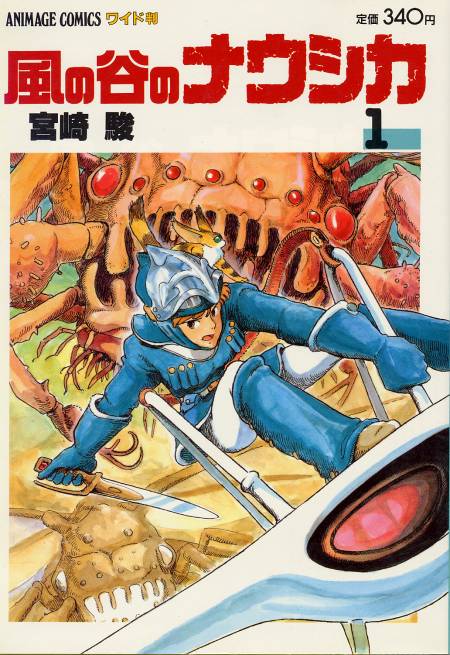
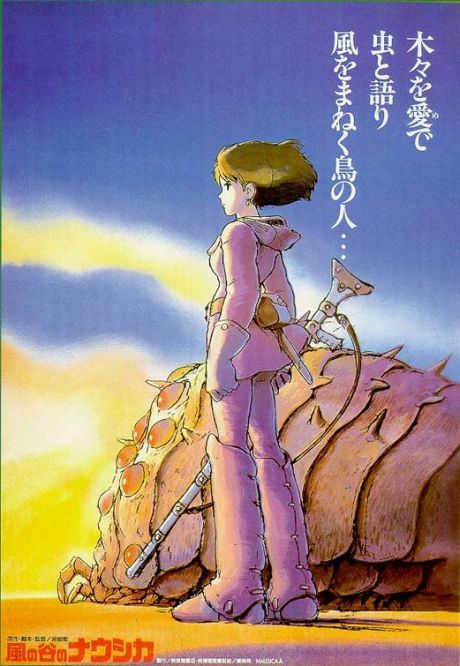
This past Sunday, Glade and I got up at around noon, ordered a pizza with green chilis and feta (sounds weird but it was delicious) and watched Nausicaä and the Valley of the Wind, directed by Hayao Miyazaki, which was a birthday present from Glade. I’ve been trying to get into anime lately and the movie seemed like a good entry point, since I voraciously read all seven volumes of the manga, which was written and drawn by Miyazaki in between Studio Ghibli films, when I came across it back in 2004.

I enjoyed the movie, even though I have the redubbed version from 2005 that features voice acting by Patrick Stewart, Uma Thurman, and Shia LeBeouf, which was a little distracting.

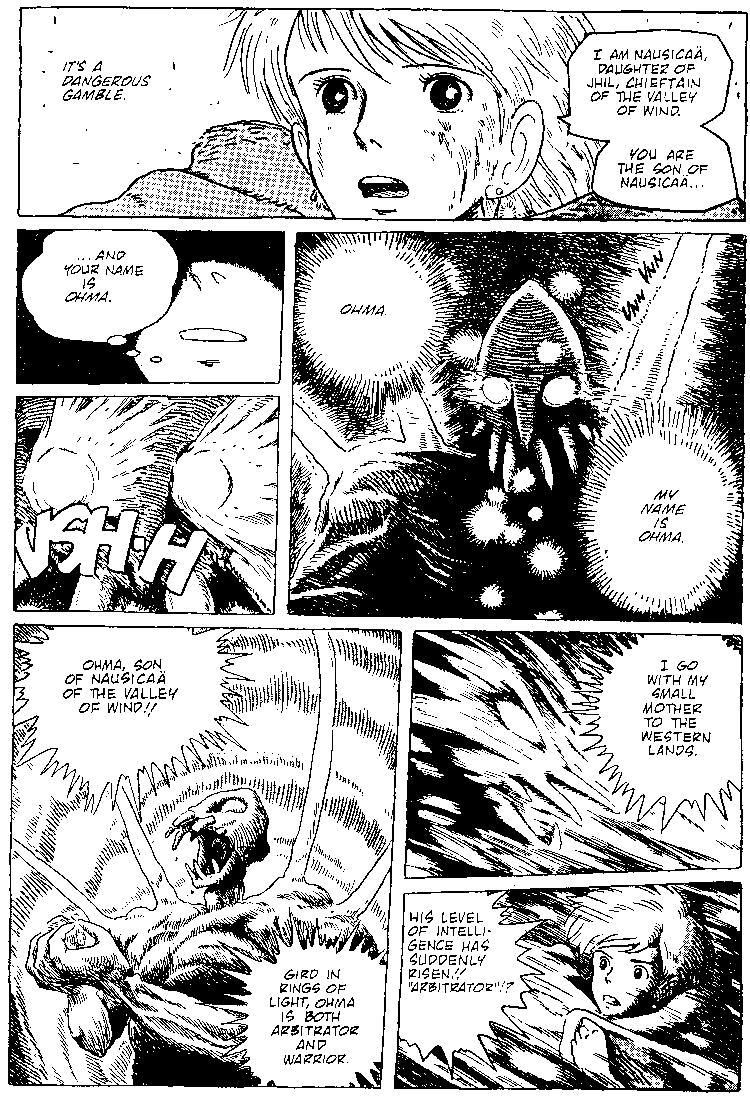
The movie only covers about the first quarter of the manga. The God Warrior is only active for a few minutes in the anime but has a prominent role in the manga.

My favorite thing about the manga, tho, is how Miyazaki blends the influence of Moebius into his style. I would love to see an anime version of Dune done by Studio Ghibli circa the mid eighties.