Cropped Will Cardini artwork

March 27, 2013

Roger Zelazny’s Chronicles of Amber – the Corwin Cycle

Filed under: SF Reviews — Tags: , — Will Cardini @ 12:18 am

The Corwin cycle are the first five novels that Roger Zelazny wrote in the Amber cosmos. They focus on Corwin, a prince of the realm of Amber, and tell one complete epic fantasy story in which the universe is threatened with disintegration.
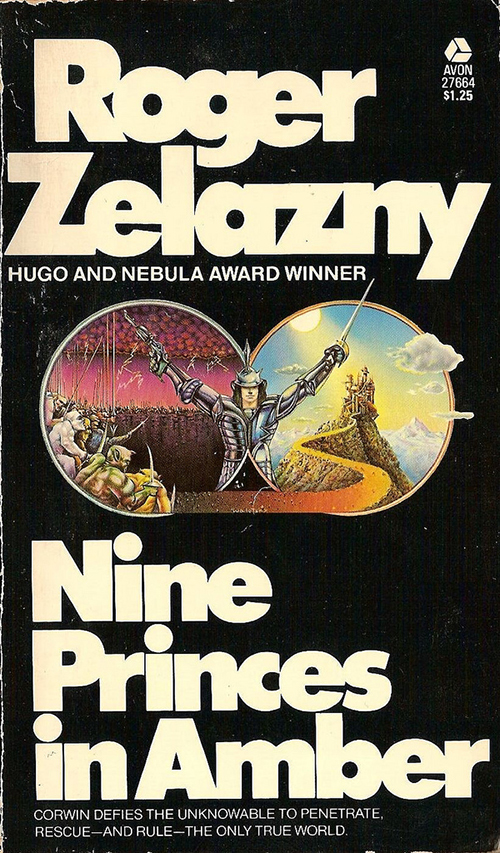
I read the Corwin cycle in an omnibus edition called The Great Book of Amber that also contains the second five-book cycle, featuring Merlin. The second cycle has mixed reviews so I haven’t started it yet. Unfortunately the edition I have contains numerous distracting typos where sometimes the intended word isn’t clear, so I would recommend tracking down the original paperbacks if you can.
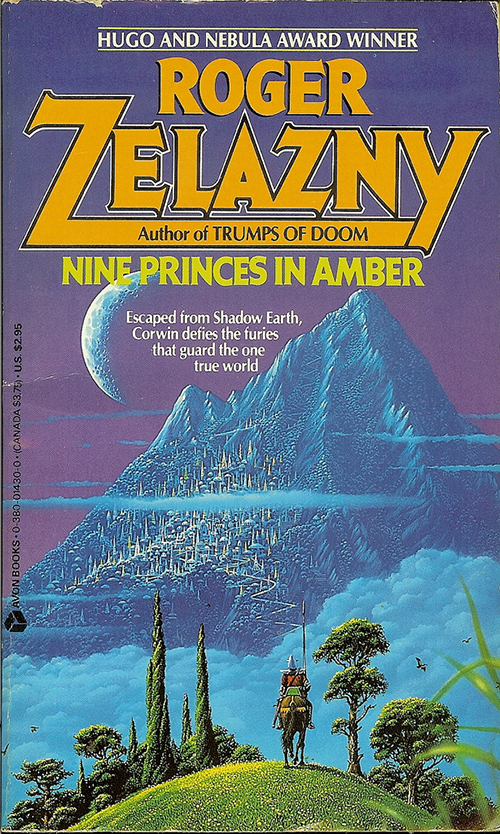
The Corwin cycle is told from the first-person perspective of Corwin, a charming but flawed and unreliable narrator. After reading newer books that switch between many points of view, it’s refreshing to read a book that stays in one character’s head from the beginning, when Corwin wakes up an amnesiac in a private hospital bed, to the climax at the Courts of Chaos.
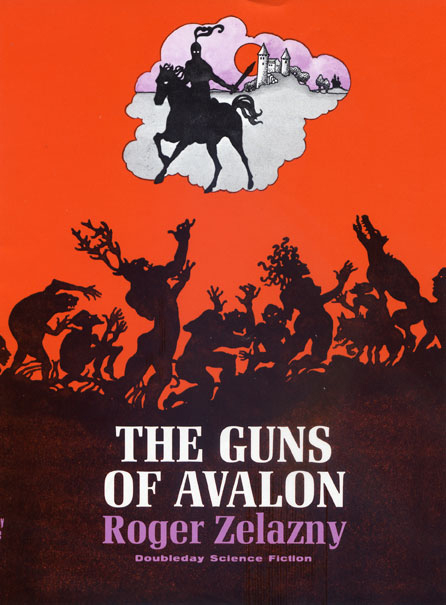
Corwin’s slacker attitude, his diction peppered with many “whatevers,” is a grounding balance to the fantastical and sometimes psychedelic action. It also feels very familiar to me from the genre work of my art comics peers and the dialogue in Adventure Time. In both Amber and these more contemporary efforts this distance between the fantastical, mythic events and the seemingly unaffected characters creates an ironic distance. Somehow this makes the whole thing feel more realistic. Perhaps because it’s closer to how I hear my inner dialogue as I experience my mundane reality. It worked for Bilbo and it works here for Corwin.
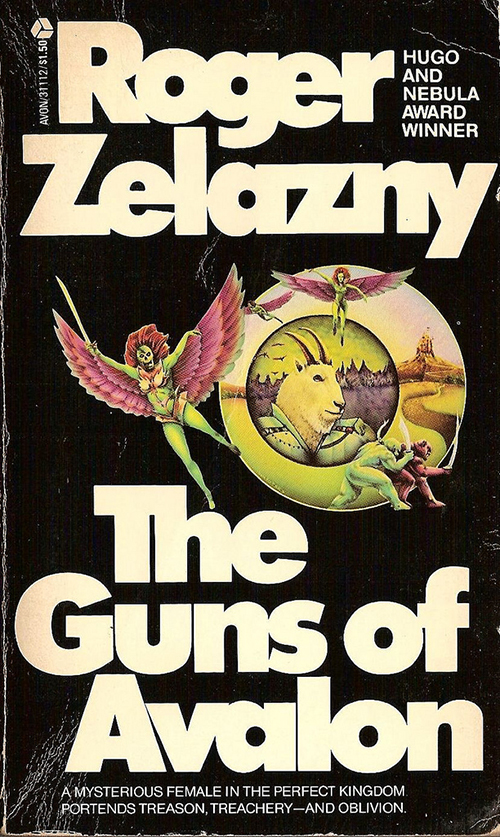
There was one flaw in Corwin’s personality that I found distateful – his misogyny (at one point he dismisses all his sisters as only “bitches”). One could argue that this reflects how Corwin is an unreliable narrator, as several of his sisters are quite significant to the plot, but I don’t remember a moment where these books pass the Bechdel Test.
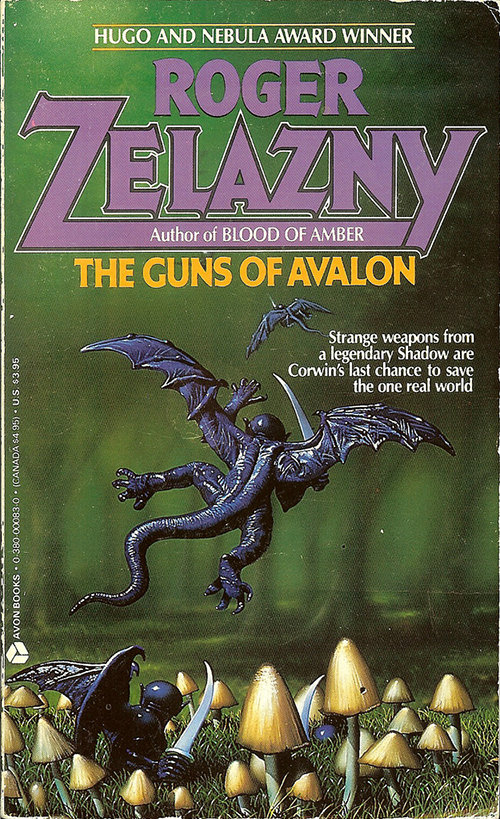
Although I haven’t read much noir personally, these commenters note that Corwin’s tone (and the opening) is extremely reminiscent of Chandler. Does this make the series an early example of a genre mashup? This pairing is mined extensively in urban fantasy but less so in secondary world epic fantasy. Despite a start in New York state I wouldn’t really consider this an urban fantasy – the concerns are cosmic and our earth is but a figment of the firmament.
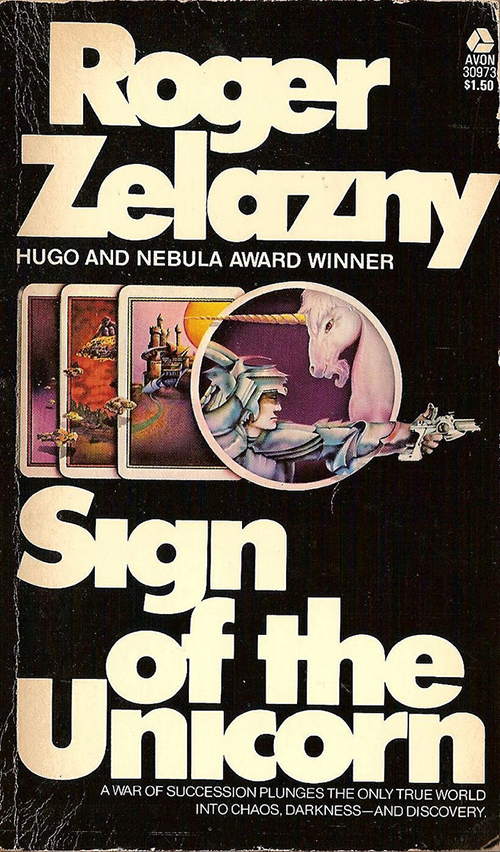
Refreshingly, Corwin, unlike so many other protagonists of epic fantasies, isn’t an orphan with no living relatives, but is instead a member of a sprawling, brawling family filled with intrigue, love, and hate. The family dynamics (and dysfunctions) feel real. Although in the end the final struggle is the semi-traditional Battle Between Order and Chaos (second cousin to the Battle Between Good and Evil), it begins with one family, the royalty of Amber, knifing each other and climbing their sibling’s corpses to the top. Zelazny really upends the fantasy trope of the disenfranchised rightful king here, which I’m grateful for. I get sick of the politics in fantasy novels – one king deposing another while the common people are ground down – at least here Zelazny shows how meaningless dynastic shifts can be.
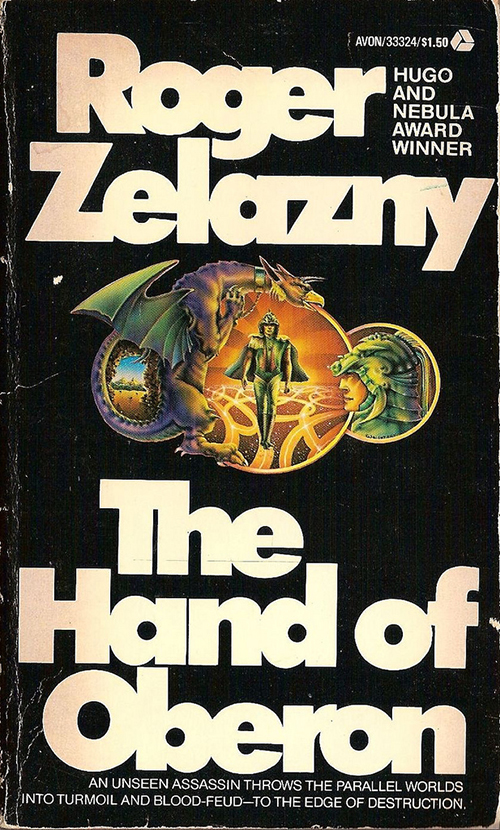
Aspects of the Amber cosmos seem familiar to me from their reflection in Robert Jordan’s latter series The Wheel of Time – both feature immortal beings who love to play politics, joining and breaking alliances as they attempt to lie, backstab, and cheat their way to the top of the hierarchy; both feature teleportation through shadow worlds that can be influenced by desire; and both cosmoses are represented by a primordial Pattern. I wonder if Jordan read it?
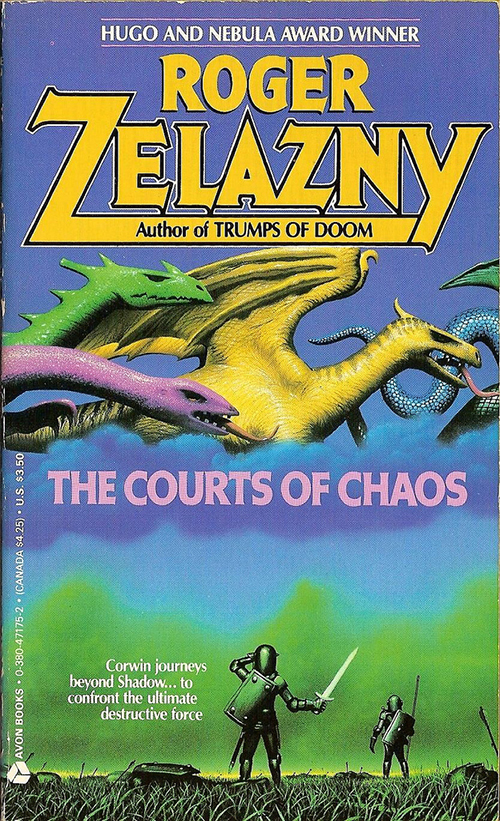
Unsurprisingly, I enjoyed the unabashed psychedelia in the first five Amber novels the most. To travel, Corwin adds and subtracts elements from different worlds, slowly aligning the reality he’s perceiving with the reality that he desires. Zelazny used this to wonderful effect by condensing days of travel into several pages of evocative descriptions of the mixed-up landscapes that Corwin and his companions travel through. And these are not the only moments of pure imagination – I can’t forget the sublime moonlit visions of Tir-na Nog’th and the shapeshifting creatures of Chaos.
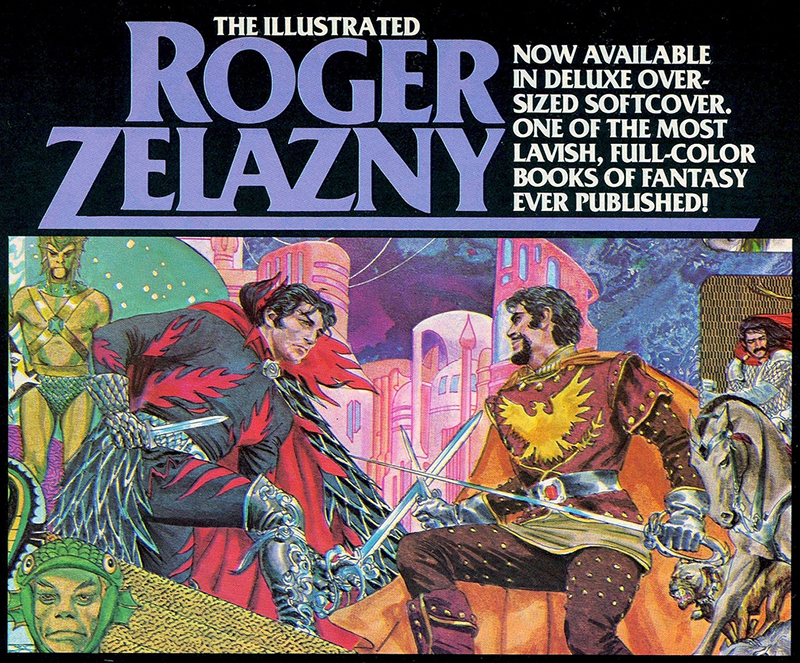
I’d only read Zelazny’s Lord of Light before this (and really dug it), but now I definitely want to read more by him. Do y’all have any recommendations?
January 8, 2013

The Last Scene of the Wheel of Time – Full Spoilers for A Memory of Light

Filed under: SF Reviews — Tags: , — Will Cardini @ 7:39 pm

I’m going to discuss the much hyped final scene of the Wheel of Time series, conceived by Robert Jordan from the very beginning*, written before he passed away, and incorporated virtually unchanged in the final book.

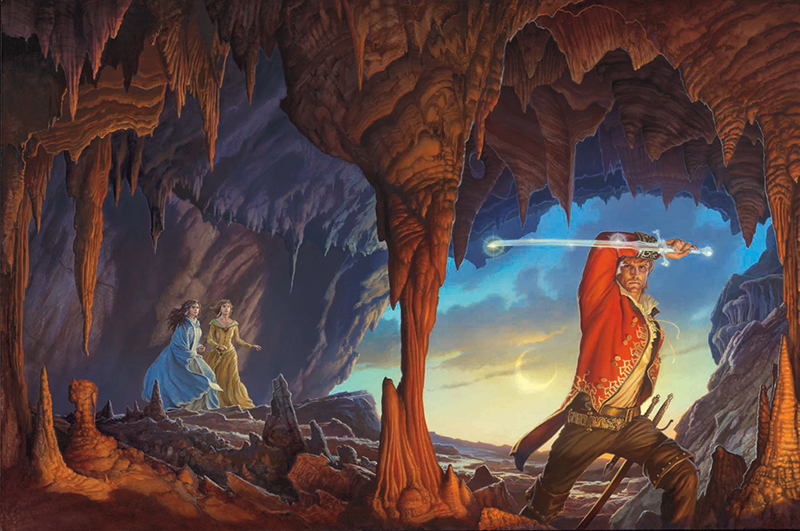
Michael Whelan A Memory of Light cover painting
Michael Whelan’s cover painting for A Memory of Light.

*Robert Jordan: “I started thinking about what would turn into the Wheel of Time more than 15 years ago, and the first thing that I thought of that was really solid was the last scene of the last book.” – From this chat.

Full A Memory of Light spoilers within. (more…)

November 27, 2012

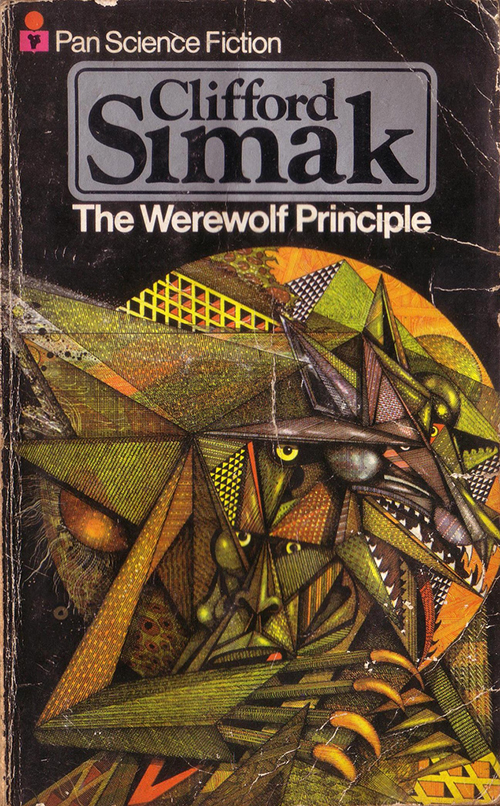
The Werewolf Principle by Clifford D Simak

Filed under: SF Reviews — Tags: , — Will Cardini @ 7:06 am

The Werewolf Principle by Clifford D Simak is a fantastic book.

The Werewolf Principle by Clifford D Simak, cover by Ian Miller
Cover by Ian Miller. From pulpcrush’s Flickr photostream.

I have fond memories of reading and re-reading City by Simak but for some reason I’ve never checked out any of his other books. The description of The Werewolf Principle in this Tor blog post about engineering humans for different planetary environments, however, made me want to track it down. I couldn’t find it at any of my usual Austin used sf book haunts, but when I went to NYC for BCGF I visited the new Singularity & Co bookstore in DUMBO and there it was.

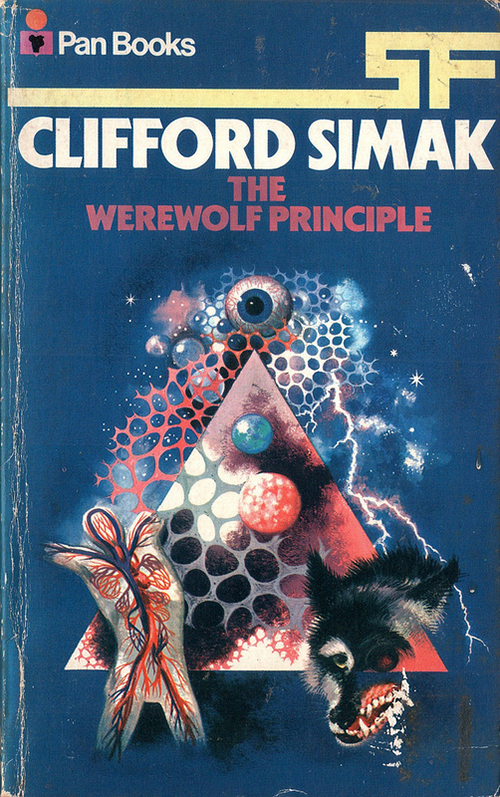
The Werewolf Principle by Clifford D Simak, Cover Artist Unknown
Cover artist unknown. From pulpcrush’s Flickr photostream.

Simak’s day job was in journalism and it’s evident in his clear, quickly moving sentences. The dialogue is a little too clunky and expository but where Simak shines is in his unexpected combination of ideas, evocative imagery, and philosophical explorations.

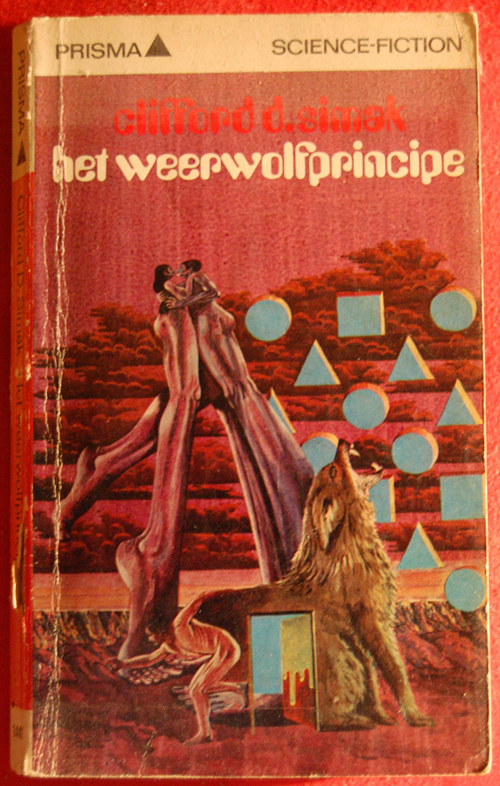
Het Weerwolfprincipe, Dutch Translation of The Werewolf Principle by Clifford D Simak
Dutch translation. Cover artist unknown. From Jan van den Berg’s Flickr photostream.

In The Werewolf Principle, Simak focuses on the dilemma of his protagonist, Andrew Blake, a shapeshifting artificial human who struggles to integrate his implanted memories of a youth in the American Midwest with the consciousness and strange abilities of the two aliens he can transform into: a mystical, telepathic wolf-like creature and an indestructible intelligent pyramid of sludge who is strictly logical and emotionless. If it sounds like a strange setup, it is. Simak eases you into it by starting Andrew Blake, whose name I took as a riff on A Blank, as an amnesiac, found floating frozen in space. Simak also does an admirable job of hinting at the hard-to-understand thought processes of the aliens.

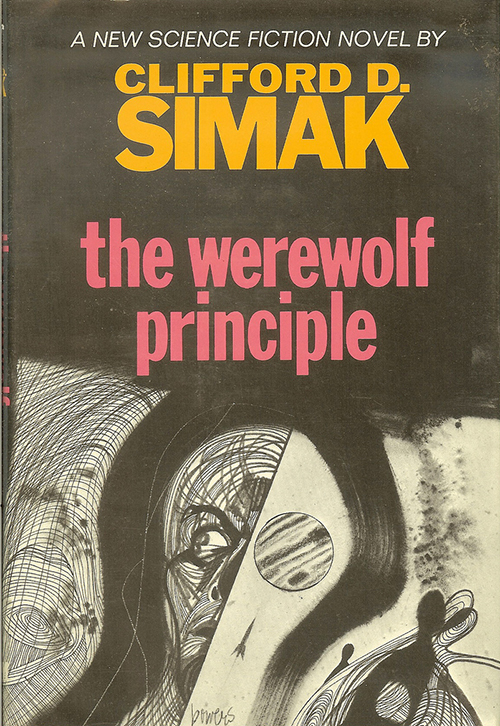
The Werewolf Principle by Clifford D Simak, cover by Richard M Powers
Cover by Richard M Powers. From Cadwalader Ringgold’s Flickr photostream.

Andrew Blake’s struggle to find a place for himself enables Simak to discuss what it means to be human, the consequences of mind uploading and cloning, and the purpose of intelligence in the universe. Simak does all this without straying too far from a small town in the Midwest, placing his story on a future Earth where technology has freed humanity to live a more pastoral life. The Werewolf Principle has its feet planted in Ohio but its eyes focused on the stars, imagining a variety of alien civilizations. In that, it reminds me of Olaf Stapledon’s masterpiece Star Maker, where the narrator walks out on an suburban English hill and has his mind transported throughout the galaxy.

L'Ospite del Senatore Horton, Italian translation of The Werewolf Principle by Clifford D Simak, cover by Karel Thole
Italian translation. Cover by Karel Thole. From Anobii.

What separates The Werewolf Principle from Star Maker is that it hints at the larger life of the galaxy but keeps the story focused on the mental anguish of one person. Simak condenses the sometimes dry descriptions of far too many lifeforms in Star Maker to short descriptions of landscapes: wind-swept alien tundra bathed in starlight, sweltering swamps, yellow domes filled with crustacean intelligences, infinitely tall black towers held together by time kept out of sync, and intergalactic spider webs. Simak also adds a love of the earth and all the things that grow on it. His descriptions of bucolic valleys and moonlit autumnal forests are evocative. However, by keeping The Werewolf Principle short and mostly earthbound, Simak doesn’t reach the same epic heights and almost religious fervor of Star Maker.

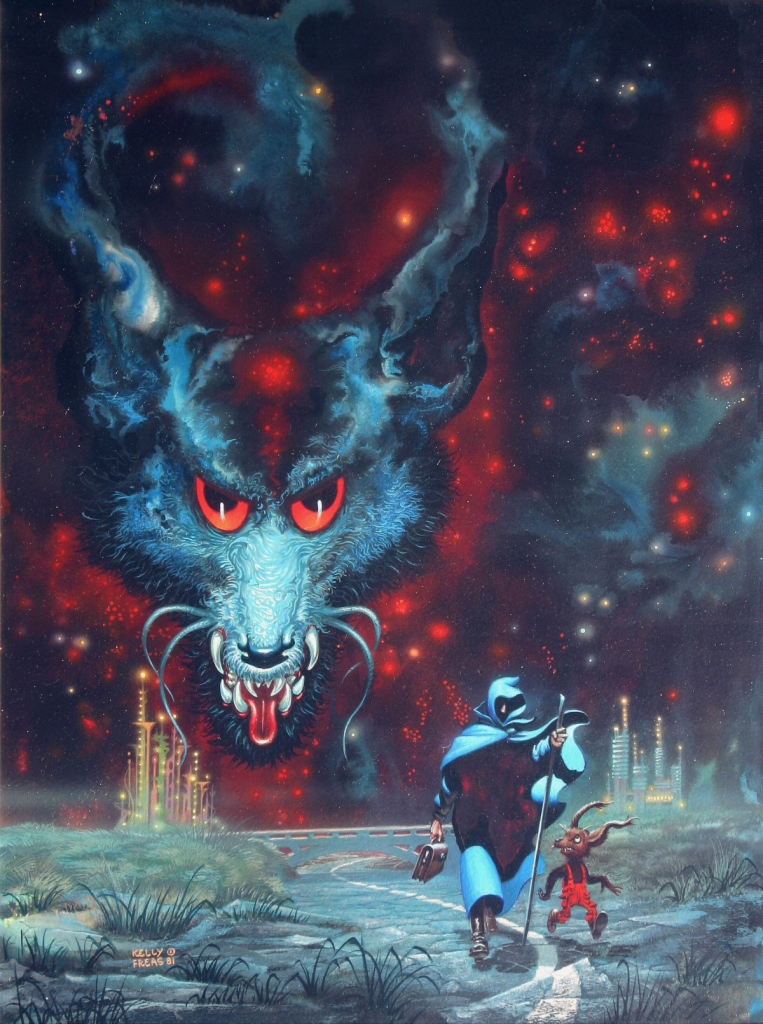
The Werewolf Principle by Clifford D Simak, cover by Kelly Freas
Cover painting by Kelly Freas without book title. From Robert Weinberg’s collection on The Illustration Exchange.

In multiple books, Simak uses hard sf concepts to populate small-town America with creatures more typically seen in fantasy novels. The Werewolf Principle has brownies and the titular werewolf. The Goblin Reservation contains banshees, trolls, and goblins (of course). Talking dogs are the dominate the Earth in City. Simak’s concerns, however, are strictly science fiction: the future of humanity and the place of intelligence in the cosmos. I’d definitely recommend checking out his novels.

September 4, 2012

Jim Starlin’s “Metamorphosis Odyssey” in Epic Illustrated

Filed under: Comics Criticism,SF Reviews — Tags: — Will Cardini @ 7:42 am

This past weekend I was flipping through some issues of Epic Illustrated that I bought a while ago on a trip but never got to reading. Epic Illustrated was an attempt by Marvel to cash in on the popularity of Heavy Metal. It was an opportunity for mainstream creators like John Buscema, Neal Adams, and Jim Starlin to draw fantasy and sf stories outside the restrictions of the comics code.

Metamorphic Odyssey by Jim Starlin
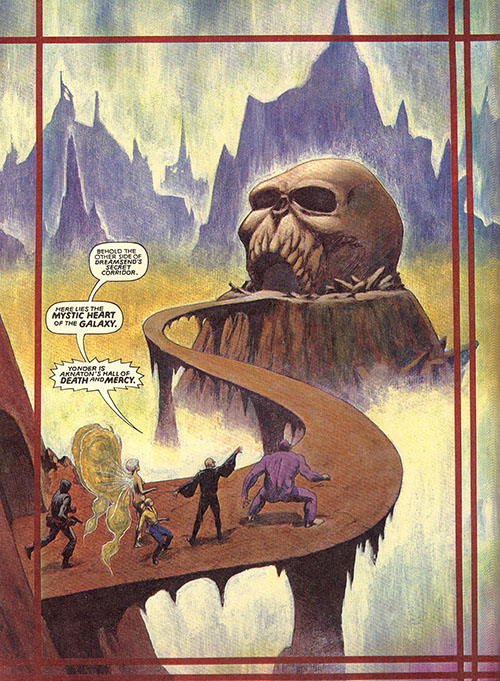
A page from the chapter of Jim Starlin’s “Metamorphic Odyssey” in the October 1981 issue of Epic Illustrated. This page has all of the protagonists: a warrior, a nude fairy woman with butterfly wings, an Earth woman, the wizard Aknaton, and the alien cannibal Za. From this blog post.

The first nine issues of Epic Illustrated serialized an epic sf comic by Jim Starlin called “Metamorphosis Odyssey.” I’ve only read two issues but, from what I’ve seen, the story draws on Egyptian mythology to describe a battle for the fate of the galaxy. There’s a quest for a powerful artifact called the Infinity Horn, which seems familiar to me after reading Starlin’s Thanos-centric miniseries, but Starlin uses the freedom of Epic Illustrated to tell a story that has greater consequences than any cosmic battle in a Marvel comic.

Metamorphic Odyssey by Jim Starlin
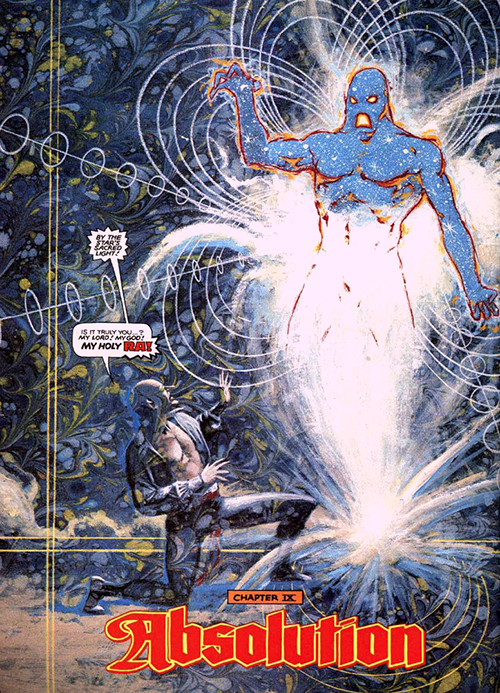
The splash page for Chapter IX of “Metamorphic Odyssey” in the June 1981 issue of Epic Illustrated. The humanoid on the left, Aknaton, is talking to the god Ra. Aknaton is from the planet Orsirus. These are the Egyptian elements of the story. I like how this page and the previous one I selected incorporate geometric elements. From this blog post.

Starlin continues the story of “Metamorphosis Odyssey” in other graphic novels and his creator-owned series Dreadstar. Despite being a big fan of Starlin’s work in Warlock and Silver Surfer, I haven’t read Dreadstar, but “Metamorphosis Odyssey” makes me want to buy the recently released Dreadstar Omnibus.

Jim Starlin paintings for Dreadstar
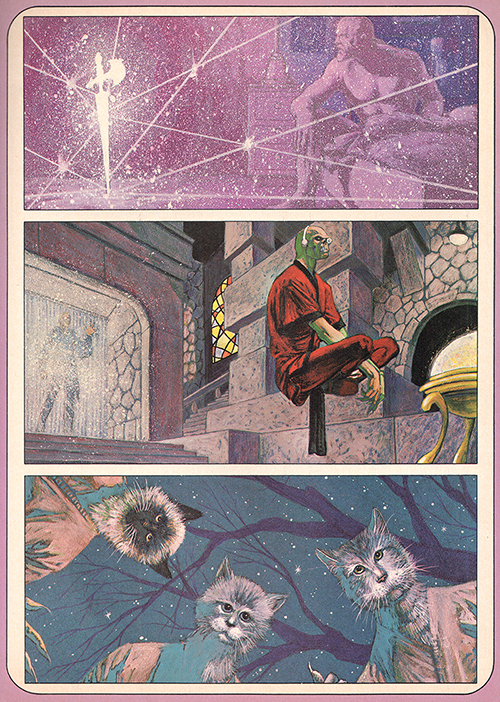
I scanned this page of paintings from a Jim Starlin interview in the December 1981 issue of Epic Illustrated. I think they’re supposed to illustrate scenes from the sequels.

What’s interesting about “Metamorphosis Odyssey” is that Starlin paints, rather than draws, the comic. In the first issue the paintings are grayscale but they switch to full color in the second. There’s an interview with Jim Starlin in the December 1981 issue where Starlin talks about his process. He used “blue or reddish-orange” matte boards as the substrate (depending on “the overall tone” he wanted) and then painted in highlights, shadows, and containing lines. He got this technique from looking at Frazetta. This is the only full-color story that I’ve seen Starlin do this way. He says that “the texture of the board kind of threw [him] off in the printing.” I wonder if the paintings could be reproduced more accurately with contemporary printing techniques.

Jim Starlin Metamorphosis Odyssey
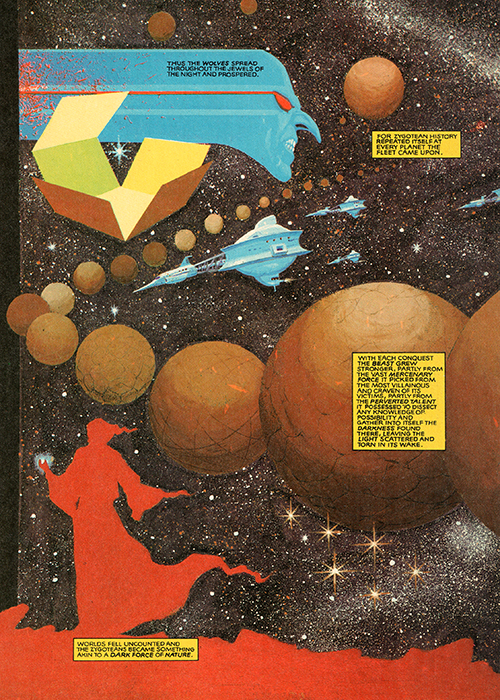
I scanned this page from Chapter X of “Metamorphosis Odyssey” in the August 1981 issue of Epic Illustrated. I love how this page is designed, it’s got movement and bold colors. There’s a pretty extensive article on “Metamorphosis Odyssey” and its sequels on Wikipedia if you want to know more.

I also learned some biographical facts about Starlin from the interview. He served in Vietnam War, which was a primary inspiration for “Metamorphosis Odyssey,” but was kicked out for his attitude. One thing that Starlin did to get discharged was to draw and distribute an anti-war comic called The Eagle. I’d like to see that!

August 21, 2012

The Dancers at the End of Time by Michael Moorcock

Filed under: SF Reviews — Tags: , , , , — Will Cardini @ 7:42 am

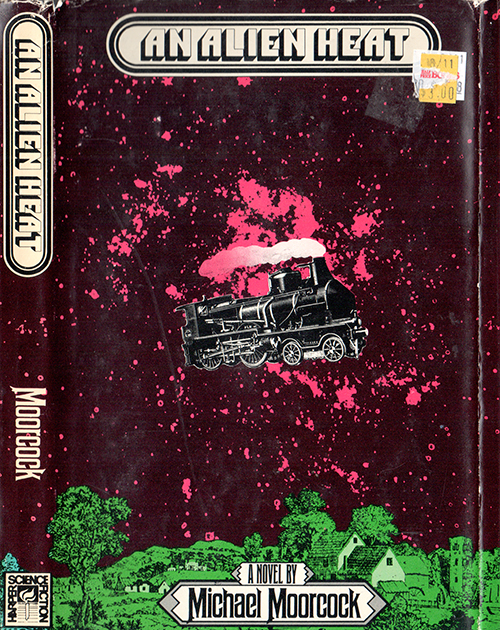
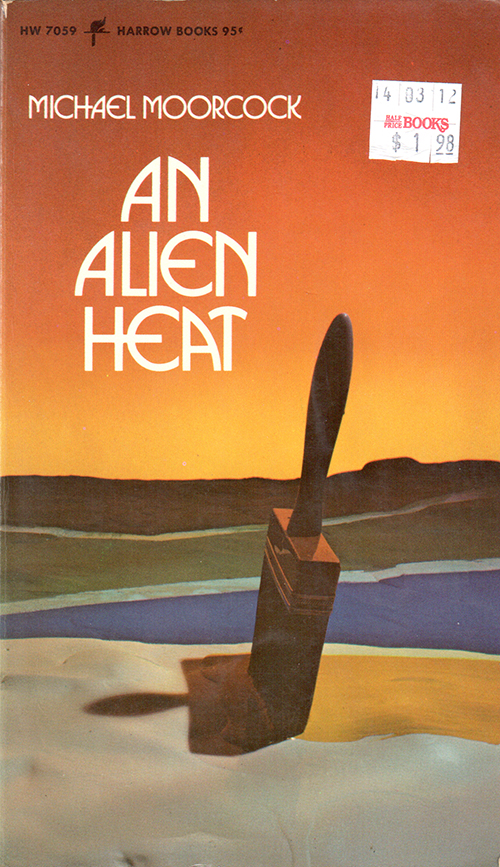
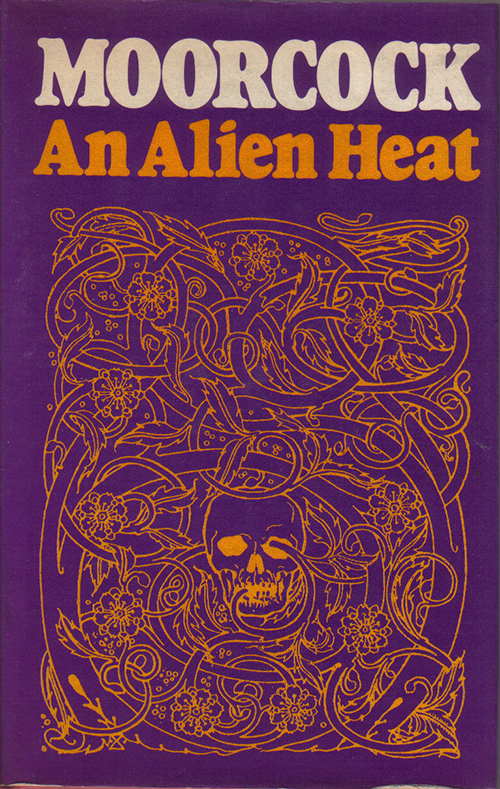
Last week I stayed up late almost every night devouring The Dancers at the End of Time trilogy by Michael Moorcock. The three books are An Alien Heat (1971), The Hollow Lands (1974), and The End of All Songs (1976).

An Alien Heat written by Michael Moorcock cover by Mark Rubin and Irving Freeman
Cover by Mark Rubin and Irving Freeman. This is the edition that I read, I picked them all up in the clearance section of Half-Price Books.

The setting is Earth at the end of time, and humanity has achieved immortality, seemingly inexhaustible energy sources, and highly advanced technology that you can use to create anything imaginable by manipulating power rings. But because the human race has been around for millions and millions of years, concepts that are so integral to our lives like work, religion, philosophy, art, and morality have lost all meaning. So instead of using their nearly unlimited power to create great monuments or explore the galaxy, our descendants throw elaborate parties where they try to one-up each other and have casual sex regardless of gender or familial relation.

An Alien Heat written by Michael Moorcock cover by Sue Greene
Cover by Sue Greene. Also from my personal library. Moorcock books always have great covers.

It’s never made clear exactly how humanity came to this point of ultimate decadence but it reminds me of the Stanislaw Lem short story “Altruizine,” collected in his fantastic book The Cyberiad. In this story, the constructor Klaupacius travels to a planet with a civilization that has attained the Highest Possible Level of Development (H.P.L.D.). Instead of doing advanced scientific or altruistic works, the inhabitants of this planet (which is shaped like a cube) loaf about in hyper-intelligent sand and only pick their noses or scratch their butts. Eventually, after some coercion, an inhabitant of this planet explains that the H.P.L.D.’s tried astro-engineering but gave up after deciding that there was really no reason to remake nature – “Would the universe be a better place if stars were triangular, or comets went around on wheels?”. The H.P.L.D.’s then tried to make all sentient beings in the universe happy but discovered that it was impossible to do so. Therefore, they’ve given meddling up and just lay around observing and pleasuring themselves.

An Alien Heat written by Michael Moorcock cover artist unknown
Cover artist unknown. I saved the best for last. From Michael Moorcock’s personal site.

So, probably with a similar outlook, the inhabitants of the Earth at the end of time only party, trying out different styles, ideas, and experiences out of an unquenchable desire for novelty. Of course, if Moorcock’s The Dancers at the End of Time was only this elaborate setting, the trilogy would quickly become boring. The conflict comes from time travelers that end up stranded in this idyll and find it disgusting debauchery but are unable to escape because of the nature of time travel in this cosmos. The protagonist, Jherek Carnelian, the last man born from a womb (rather than created as a fully-formed adult), and thus a darling of this future society, decides that his latest affectation is going to be falling in love with one of the time travelers, a woman named Mrs. Underwood from a 19th century suburb of London. The interplay and misunderstandings between Jherek and Mrs. Underwood form the comic core of these novels. Every interaction between a delight to read. And the plot is fast-paced. Moorcock throws up marvel after marvel, twist after twist. I highly recommend this trilogy. I get the sense that it ties in loosely with Moorcock’s multiverse. The protagonist’s name, Jherek Carnelian, echoes that of one of the Eternal Champions, Jerry Cornelius, a hip spy and provocateur. I’ve only read Elric so I’m not familiar enough to catch any other references but I plan on reading more Moorcock soon, including a short story collection in this same setting.

August 7, 2012

The Quest of the Riddle-Master by Patricia McKillip

Filed under: SF Reviews — Tags: , , — Will Cardini @ 9:14 pm

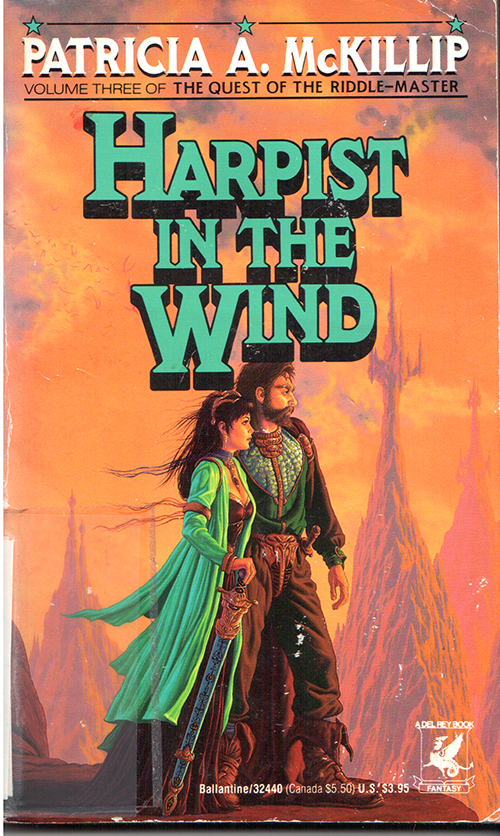
I just finished the fantasy trilogy The Quest of the Riddle-Master, written by Patricia McKillip. The three books are The Riddle-Master of Hed (1976), Heir of Sea and Fire (1977), and Harpist in the Wind (1979). The trilogy is a beautifully written story with many twists and turns. I won’t spoil any specific plot points but I’m going to discuss the story generally in this review.

Harpist in the Wind by Patricia McKillip cover by Darrell K Sweet
Cover art by Darrell K Sweet. I’m not really a fan of Sweet’s Wheel of Time covers but I dig this one. From my personal collection.

Click here to read the rest and see some of my spoilery fan art.

June 12, 2012

Prometheus Thoughts with Spoilers

Filed under: SF Reviews,Sketchbook Pages — Tags: , — Will Cardini @ 7:59 am

I’ve now seen Prometheus twice so I’d like to tell y’all my spoiler-filled thoughts. I’ve read a lot of reviews and opinions seem generally mixed: the visuals are spectacular but the plot, science, and character motivations are weak. I see what these reviews are saying but I give Prometheus some leeway just because there are so few big budget, big idea sf movies. For example, I find the ideas in Erich von Däniken’s Chariots of the Gods to be complete fantasy. But that doesn’t stop me from enjoying the mythic resonance of Jack Kirby’s The Eternals and it doesn’t stop me from digging Prometheus. And like The The Eternals, Prometheus is showing us our place in the cosmos by investigating the myth of the Titans.

The beginning sequence of Prometheus shows the Earth being seeded with life. An Engineer is transformed into the primordial soup of DNA strands. Why would the Engineers seed the earth with life, come back and check on it after millions of years, and then try to destroy it? Maybe it was because they could, the same answer that Charlie gives David for why humanity would create synthetic people with artificial intelligence. Or maybe the answer’s more sinister and the Engineers created humanity to provide the Engineers with test subjects for their weapons of mass destruction.

I dig Prometheus because it plays with ideas as large as a planet and as old as life. Throw in body horror, deadly impregnations, and highly sexualized monster designs that approach Johnny Ryan’s Prison Pit and I’m sold. It’s not as good as Alien but hardly any movie can match that spare masterpiece.

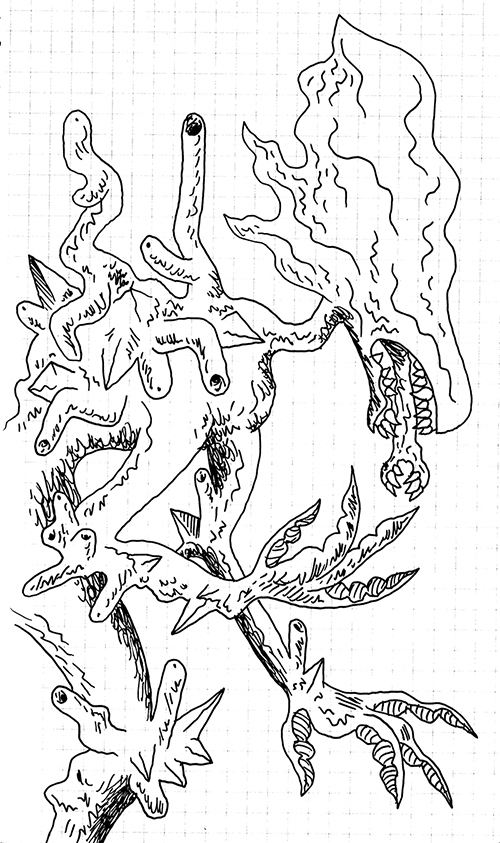
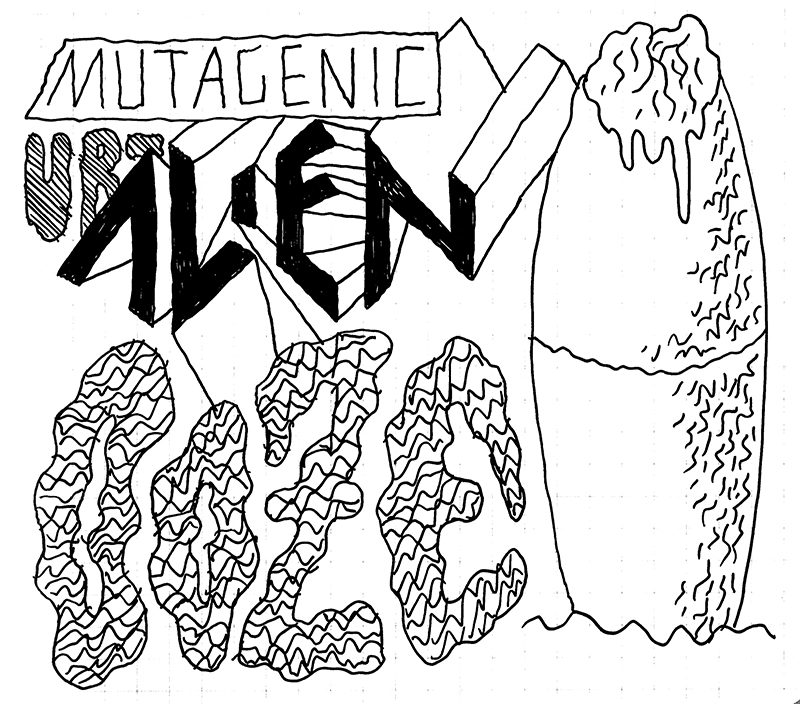
Even after seeing all of the riffs on the xenomorph in Prometheus, the original xenomorph remains my favorite sf creature. It’s ruthless, it’s terrifying, it has no eyes but it knows exactly where you are. It’ll impregnate you with its young and destroy you. We have no idea how intelligent they are. In the Alien quadrilogy, they are a force of nature. Does it spoil my appreciation of the xenomorph to know that they are purposefully created weapons? No. In the other Alien movies, we get hints that Weyland-Yutani wants specimens to use as templates for biological weaponry. With its metal teeth, acid blood, and shiny reflective carapace, the xenomorph already inhabits a weird limbo between machine and animal. And I love the idea of the mutagenic ur-Alien ooze that the Prometheus crew encounters in the skull-topped pyramid. We see so many varieties of effects and creatures that I can only assume that the ooze delivers individualized destruction.

I can forgive the rushed, reckless investigation of the Prometheus crew by thinking of Elizabeth and Charlie as religious zealots on a quest instead of rational scientists. Shaw’s faith in particular is unshakeable. Even when our creators want to wipe us out she still clings to her cross. It reminds me of Philip K Dick’s gnostic outlook: our world is a place of evil, therefore the being who created the cosmos is evil; but Christ delivers salvation from outside the evil material world. Or maybe that faith is a delusion and it’s just more massive, more implacable, and more evil giants all the way up to the source of the universe.

If the Prometheus sequels get made they could definitely ruin my enjoyment by providing too many unsatisfying explanations and not enough mysteries. I’m not really interested in seeing exactly how we get from the last scene of Prometheus to the crashed spaceship the crew of the Nostromo finds on Alien.

June 5, 2012

Prometheus, Alien, and Aliens – A Spoiler-Free Discussion of Tone and Themes

I’m a big fan of the Alien series. I dig all of the movies in the quadrilogy, even the usually panned Alien Resurrection (c’mon, it’s directed by Jeunet!), so I’ve been super stoked that Ridley Scott is returning to the Alien universe. Last week I saw an advanced screening of Prometheus and then rewatched Alien and Aliens over the weekend. I’m going to discuss the difference in themes and tone in all three without spoiling any plot points of Prometheus.


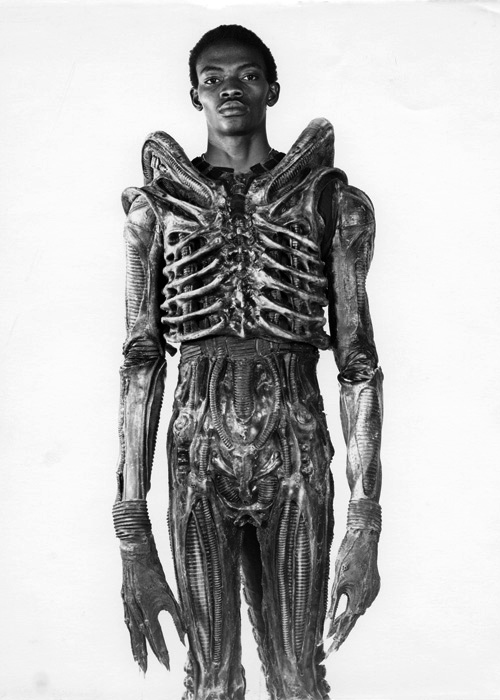
Bolaji Badejo in the Alien costume.

Alien is one of the greatest sf movies of all time. Every time I rewatch it, that status further solidifies. The first half of the movie is suspenseful even when you know what’s going to happen (does that validate arguments that spoilers don’t ruin a movie?). The tech looks dated but I can believe that a space mining company looking to save money would retrofit some terminals. The room where the captain and Ripley consult with Mother and its blinking lights still has a futuristic sheen and the space ship and suits have the appropriate level of grunge. One detail that my wife noticed was that no one’s wearing makeup. You feel for these people who are tired and just want to get home but are set off-track for some potentially unpaid overtime by their corporate overlords.


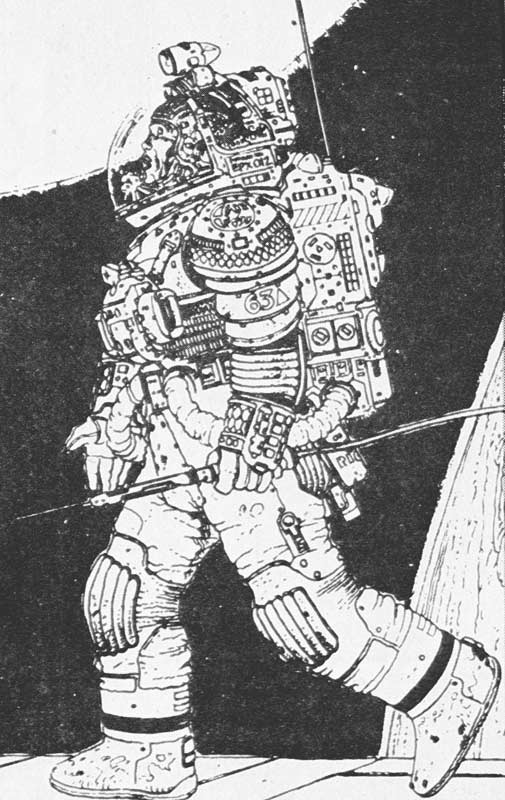
The spacesuits in Alien were designed by Moebius.

The slow pans and long setup of Alien remind me of 2001. This viewing I noticed that the effects for the explosion of the Nostromo look very similar to the effects used for Bowman’s trip into the monolith. There are two flat planes of effects that recede towards the horizon. According to this extensive article on 2001’s special effects, the two receding planes were created by a slit scan machine created by Douglas Trumbull. I can’t find any information on how they created the Nostromo explosion.


A still of the Nostromo explosion.

Aliens throws all of this grunginess and seriousness of Alien away. In Alien, Ripley was a competent woman just doing her job with a clear head. She gets thrust into the center of the narrative by seeing the sense in following protocol. But in Aliens, Cameron saddles Ripley with a tragic backstory beyond an understandable case of PTSD. Then he weighs the plot down with brash, bumbling space marines and a little kid that has to be rescued. After the spare horror of Alien, Aliens feels bloated with guns and screaming. Maybe I’m being too harsh on Cameron because of Avatar. The xenomorph nest and queen are excellent, horrific creations. The idea of being cocooned in resin waiting for a facehugger is chilling and expands on the body horror of being used by a parasite.


A still of the alien queen.

Prometheus is also a digression from Alien but, unlike Aliens, I enjoy how it changes the tone and adds to the themes. What can I say, it’s easy to win me over with spectacular, expansive alien vistas. There are also mystic elements, thought-provoking ruminations on creation. Some of the ways these ideas are expressed didn’t quite hold up to my understanding of the science involved but I still appreciate that the movie poses the questions.


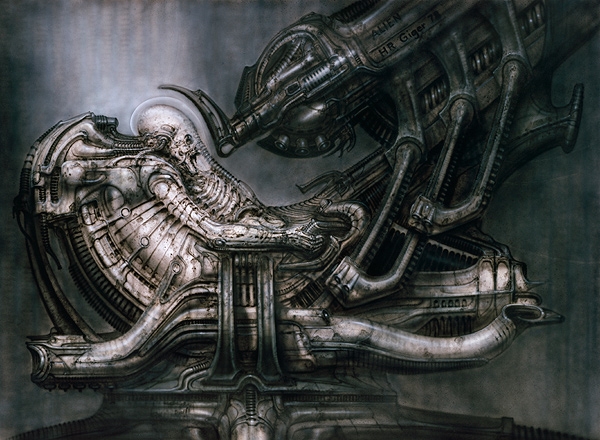
HR Giger’s drawing of the space jockey.

The best part of Prometheus, though, is how it expands on the extraterrestial designs in Alien. Also, it continues the tradition of strong female central characters. In particular, I’m pleased to report that Prometheus passes the Bechdel Test.


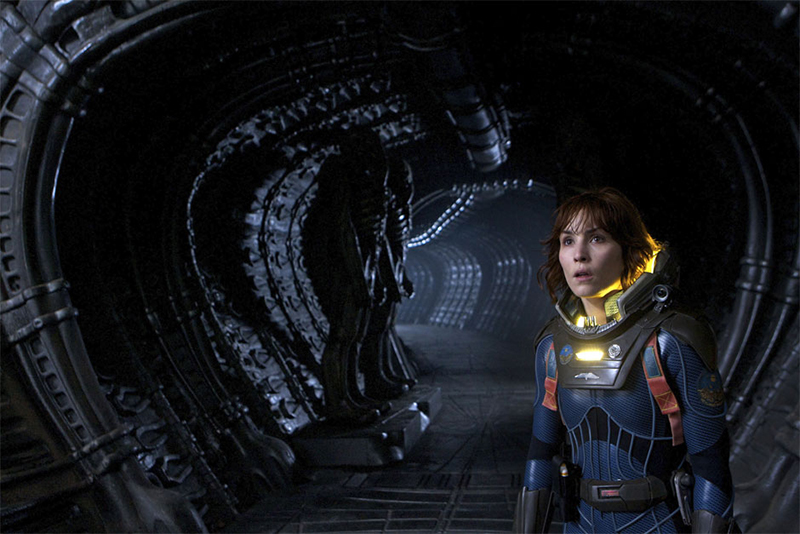
Noomi Rapace in Prometheus.

I’m going to have a spoiler post on Prometheus next Tuesday.

January 31, 2012

Interview with Ryan Cecil Smith on SFSF #2

Filed under: Comics Criticism — Tags: , , , — Will Cardini @ 7:06 am

Ryan Cecil Smith is one of the most exciting young artists making comics. His minicomics are meticulously designed, packaged, and printed. After I finished the three parts of SF Supplementary File #2, a beautiful redrawing of some scenes from Leiji Matsumoto’s manga Queen Emeraldas, I had some questions for Smith about his process and intent. I was going to just send him an overly enthusiastic email, but then I thought that some y’all might also be interested in what he had to say. So Smith and I sat down (at our computers in different continents) and shot some questions and answers back and forth (through email).

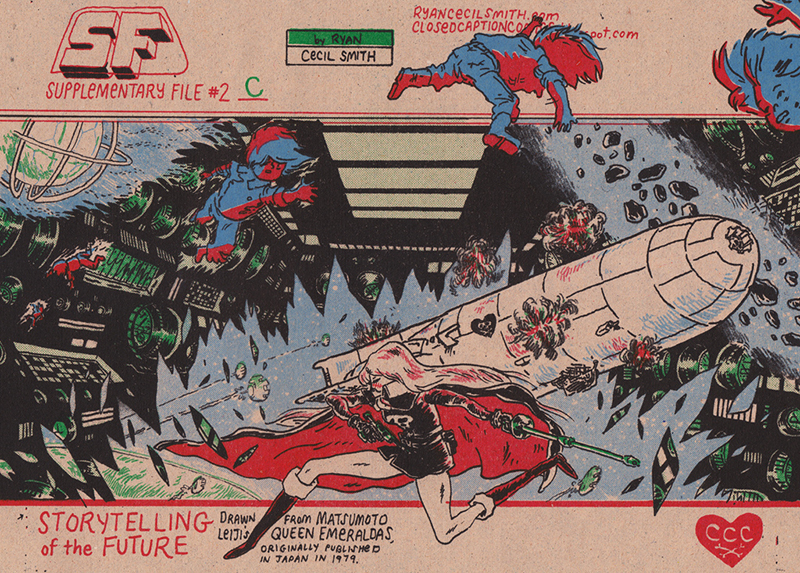
SFSF2C cover
The cover for SFSF #2C, a multicolor Risograph, from Smith’s Flickr.

I’m pleased to present our interview here:

#1: You say on your blog and the cover of the comics that SF Supplementary File #2A and #2B are drawn from Leiji Matsumoto’s manga Queen Emeraldas. Can you tell me more about your process for drawing from Matsumoto’s manga? How do you pick which sections to redraw and how faithful are you to the original work?

Ryan Cecil Smith: In SFSF #2, I was pretty faithful to the original in terms of the content. Like, the panels are laid out the same way and I drew what’s inside all the boxes (mostly). However I tried to draw quickly and not worry about capturing anything of his drawing style. I drew in pencil, between 2B and 10B, so I can’t draw the tightest details, which is good. As for picking the section, well you know A and B and C are all straight, consecutive together. I wonder if that’s not apparent, or is a little confusing? Basically, I chose this segment because I think it represents some great aspects of his work in a small piece of one story. It’s got the long crawls across space, the dreamy narration, and… you know what I mean!

#2: Yeah, it’s clear to me that #2B follows directly on #2A. It seems like #2A starts in the middle of the story, with a battle just ending, which is why I was asking about what segment you selected. Or does the manga not include the build up to Queen Emeraldas blasting the bandit Deathskull across his planet?

RCS: I just thought the preceding part wasn’t as interesting visually, or as a story segment. And I don’t dislike having that conversation about Deathskull as a starting point, in fact I think there is value to keeping it there. To me, this is like knowing the fall of Lucifer occurred between Genesis 1:1 and Genesis 1:2.

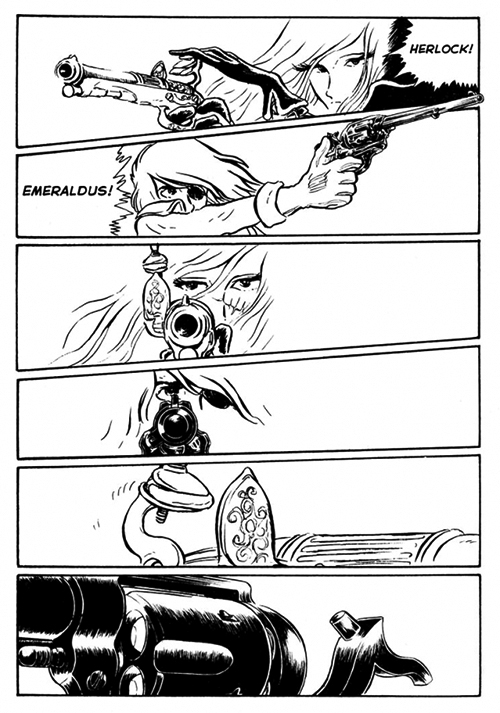
Queen Emeraldas by Leiji Matsumoto
A page from Matsumoto’s Queen Emeraldas, via Sean T Collins.

#3: As far as I can tell Queen Emeraldas has never been officially published in English. Are you translating it yourself?

RCS: I translated it with my friend Andrew Brasher, who reads Japanese much better than I do! He has some translations of music zines on his blog.

#4: You’ve published both minis of your own original stories and minis based on other author’s manga. What draws you to reworking these comics instead of telling more of your own stories?

RCS: That’s a great question! I think almost all of my published comics have been retellings or responses to other work. I think maybe I have the strongest urge to create when I see something great (like a movie or book), and my brain is excited, and I want to share my perspective about it. I hope that it feels like a relevant discussion of that thing (like Umezu Kazuo’s Baptism, or Peter Weir’s Picnic at Hanging Rock) and is also an interesting piece of artwork by itself.

Umezu Kazuo monster drawing
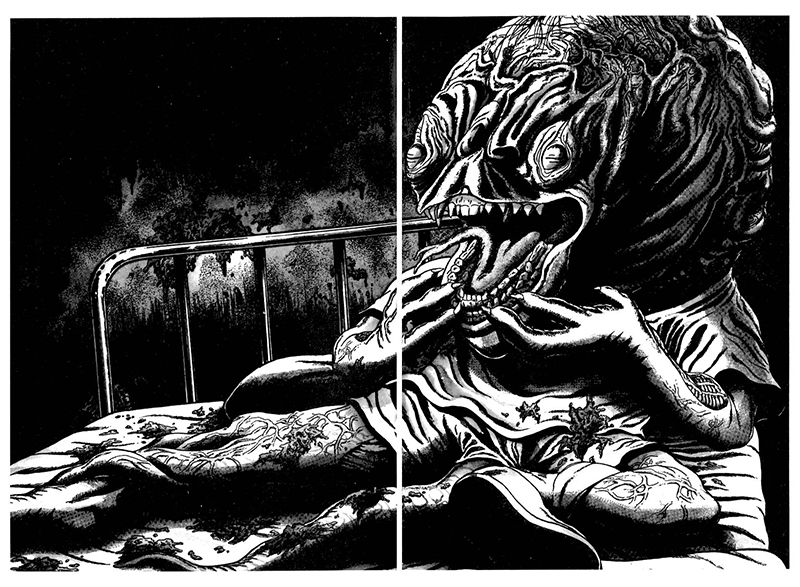
A monster drawing by Umezu Kazuo, via Monster Brains.

#5: These Supplementary Files are beautifully printed. I love the risograph printing and the paper they’re printed on. I see they’re printed by Retro Jam Printing in Osaka. How involved are you with the printing? Can you tell me a bit about the printing process for these?

RCS: The way Retro Jam works is you give them the original artwork (digitally or on paper, like I do) and they do all the copies in their shop. I’ve done a lot of printing with them by now, so we have good communication about my particular concerns. I mean, you know a Risograph looks just like a photocopier, so you can easily imagine what the printing looks like. But they have really nice machines, and they have 24 colors of ink. I do my best to prepare good originals for them (I’m talking about having the right contrast, eliminating stray marks, registering everything on paper, etc.) and they print it and do a good job. For me, it’s a little scary handing off a big job to them sometimes, but they’re great at what they do, so what am I worrying about??

#6: Oh wow so a computer isn’t involved in the process at all! Awesome. So if you’re drawing it all in pencil, but also trying to eliminate stray marks and have good contrast, do you do a few drafts of each page or do you just erase and redraw on the same page? Do you use a lightbox to do the registration or are you drawing these on vellum or something transparent?

RCS: Almost every page was a first draft. I treat my originals carefully and I have a process to bring out the best contrast I can get (it’s something like photocopy, white-out, adjust levels, photocopy, re-pencil). I have to use a non-repro blue pencil underneath – that’s how I sketch the layouts, so they don’t get picked up by the Risograph.

Pegacorn Press Risograph ink drums
A view of the ink drums of Pegacorn Press’s Risograph.

#7: Do you never use a computer in your comics-making process or is that just something you wanted to do for this project?

RCS: I haven’t used any digital steps in my comics for the last 3 years, with maybe 1 or 2 exceptions. I am not analog “on principle,” but it fits the way I work and the tools I have. In fact I don’t even like scanning my work, because I think I have a crappy scanner! If I was confident in my technological capabilities, I would use a computer more often.

#8: What’s next for you? Are you going to continue the SF series or are you going to do something different?

RCS: Yep, SF #2 is what I’m doing right now. I was working on Two Eyes of the Beautiful III for a while, but it wasn’t working out, so I put it “on hold.” I’d like to continue with that story in the future. I have more ideas for small zines than ideas for bigger projects. I want to make some more work that draws from my real life and my environment.

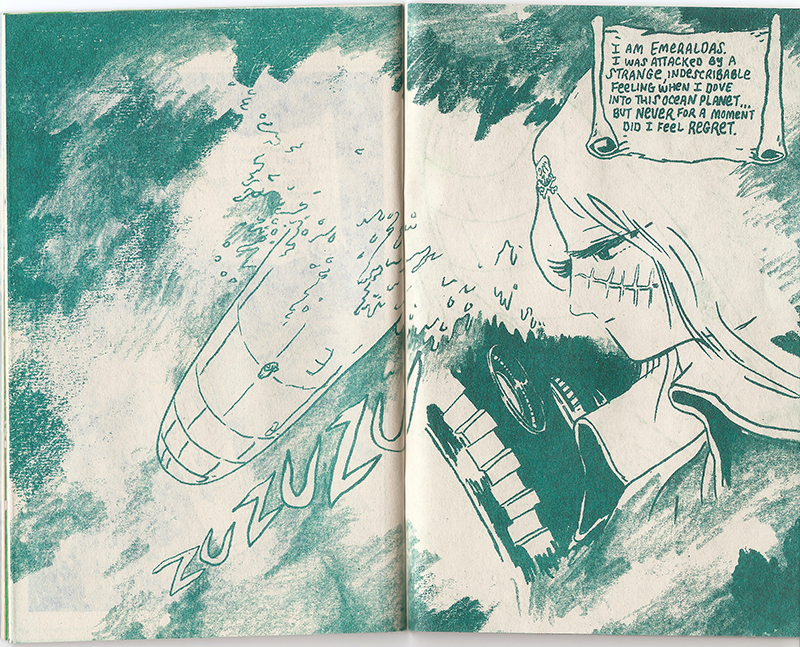
A spread from SFSF 2C by Ryan Cecil Smith
A scan of a spread from my copy of SFSF #2C. You can really see Smith’s pencil marks.

P.S.: Thanks so much to Ryan for taking the time to answer my detailed questions. I’m a process nerd. You can buy all three parts of SF Supplementary File #2 at Smith’s site, as a bundle or separately, or at Domy Books in Austin whenever they have them in stock (they sell out quickly!). If you’re curious about Smith’s other manga redrawing project, Two Eyes of the Beautiful, his life as an American cartoonist teaching English in Japan, and much more, tune your browsers to Ao Meng’s Skype interview with Smith at Novi Magazine.

January 27, 2012

The Player of Games by Iain M. Banks

Filed under: SF Reviews — Tags: , , — Will Cardini @ 7:13 am

Since my last post, I’ve been staying up late burning through The Player of Games by Iain M. Banks. I loved it. This is now unofficial Banks week at the Hypercastle.

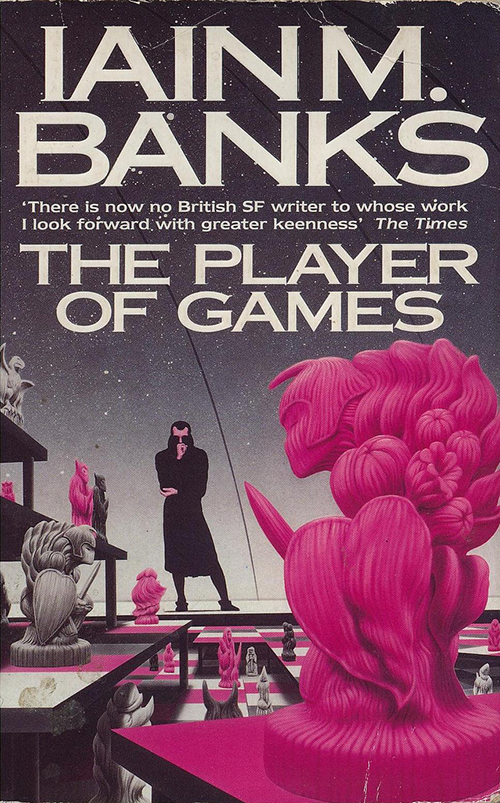
The Player of Games by Iain M Banks
Cover by Mark Salwowski, via qualityapeman’s Flickr stream.

The Player of Games is a much better introduction to The Culture than either of the other books I’ve read, Consider Phlebas (the first published Culture book) and Matter. The Player of Games is a tightly structured story of the confrontation between one Culture person, Jernau Morat Gurgeh, and a very different society. Banks is leisurely in the introduction, showing us “the extended cocktail party” that is the Culture, as Russ Allbery put it in his review. In the latter two thirds of the book, Banks shows us the Culture in contrast to its enemy. I’m usually not very taken with utopias but I find the Culture totally captivating. It’s the perfect escape for a feminist leftist rationalist artist. When I allow myself to hope, I dream that the arc of history is bending humanity towards something similar. Therefore I found it especially thrilling when Gurgeh’s story pits his values against an oppressive capitalist interstellar empire that is the dark shadow of our future. Unlike the other Banks sf books I’ve read, The Player of Games has much more thought than action. The conflict centers around matches of a byzantine board game called Azad. We are told that Azad is incredibly complicated but fortunately Banks leaves all but a few evocative details to our imagination. Another intriguing sf conceit in the book is the three-sexed species that rules the Empire of Azad, especially when the narrator breaks the fourth wall and discusses the reasoning behind pronouns choices. Does it make it easier to see the effects of patriarchy through the twisted mirror of an all together alien gender? Outside of the combined critique of capitalism, imperialism, and patriarchy, what I most enjoyed about this book was reading about Gurgeh excelling at the game bouts. There’s something compelling about following the exploits of a highly competent individual. But if you prefer your protagonist to be more relatable, human, and flawed, this is not the book for you.